
What Are the Most Common Door Issues in Florida?
Humidity, sun, and cheap hardware, and none of it is your fault. Wood slabs and jambs swell for half the year. Sun cooks the finish and the weatherstripping on any door that faces west. A lot of houses were built with light hinges, short screws, and thin thresholds that were never going to last. Interior doors and exterior doors fail differently: interior doors swell and sag, exterior doors rot and leak.
Between August 12 and September 3, 2026, 55 estimate requests were pulled from our website. Doors and windows topped the list, 13 of 55. Most door problems show up as one of a handful of symptoms. Each one points at a likely cause and a known fix.
| Symptom | Likely cause | The fix |
|---|---|---|
| Sticks in summer, fine in winter | Humidity swelling an unsealed slab | Seal the edges; plane only as a last resort |
| Rubs at the top corner all year | Top hinge has dropped | Long screw through the hinge into the framing |
| Binds in the last inch before it latches | Strike plate out of line | Adjust hinges, then move or file the strike |
| Sags or drags on the floor | Loose or stripped hinge screws | Long screws, a shim behind the hinge, trim last |
| Will not latch without lifting it | Strike misaligned, or a warped slab | Reset the strike; a warped slab gets replaced |
| Drafts and bugs at the bottom | Dead weatherstripping and sweep | New weatherstripping sized to the door |
| Soft, spongy jamb at the threshold | Rot at the bottom of the door jamb | Cut out and rebuild, or a prehung door and frame |
| Bi-fold jumps its track | Worn pivots, guide, or a loose track | New hardware, track leveled and screwed to framing |
| Slider hard to open, glass fogged | Rollers, track, seals, and glass aged out together | Convert the opening to French doors |
Common door issues: symptom, cause, fix
Why Does My Door Stick in Summer but Not in Winter?
Because it is swelling, and it will let go again when the air dries out. A door that sticks in August and works in January is taking on moisture across its width. The top edge and the latch edge take on the most, because they were usually never sealed. Solid wood doors swell most, and a bedroom door with raw edges almost as much.
Before blaming the weather, check the hinges. Close the door slowly and watch where it touches first. Then compare the gap on the hinge side to the gap on the latch side. A wide gap at the hinges and no gap at the latch is a hinge problem, not a swelling problem. If the door binds only in the last inch before it latches, the strike plate is the culprit.
Planing the slab is the last resort, not the first, because wood does not go back on. Doors that require repairs every summer are usually unsealed slabs, so when we do take material off a binding edge, the fresh wood gets proper sealing so it does not swell again next year.
How Do You Fix a Sagging Door?
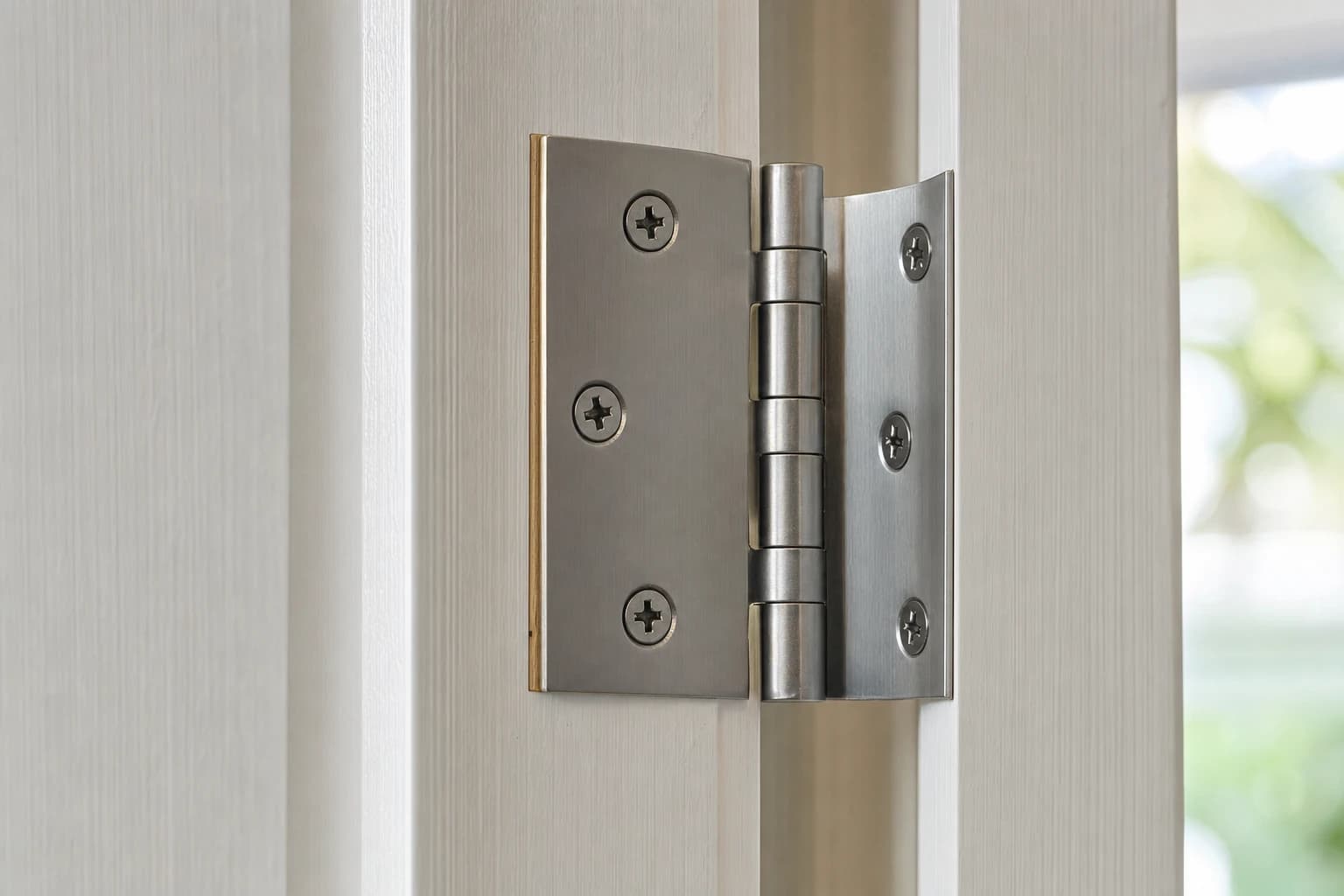
Start at the top hinge, and most of the time that is the whole fix. A sagging door announces itself: the top latch corner droops, the bottom edge scrapes the floor, and the gap at the top opens up on the latch side. The top hinge carries the load, so worn hinges, squeaky hinges, and loose hinges are the same story at different stages.
The fix is to replace a short hinge screw with a long one that reaches the house framing. That snugs the door back into place, so it opens and closes smoothly, without pulling the jamb out of plumb. Where a hinge mortise was cut too deep at the factory, a thin shim behind the hinge leaf pushes the slab back into line. Replacing hardware is the answer only when the hinge has bent or the screw holes are chewed past saving.
If the bottom still rubs after the hinges are right, the door gets trimmed and the raw edge sealed. If the frame itself is racked, from settlement, structural issues, or old water damage at the bottom of the jamb, the frame gets fixed before the door does. A door hung in a crooked frame will sag again, and we would rather fix it once.
Why Does My Door Not Latch?
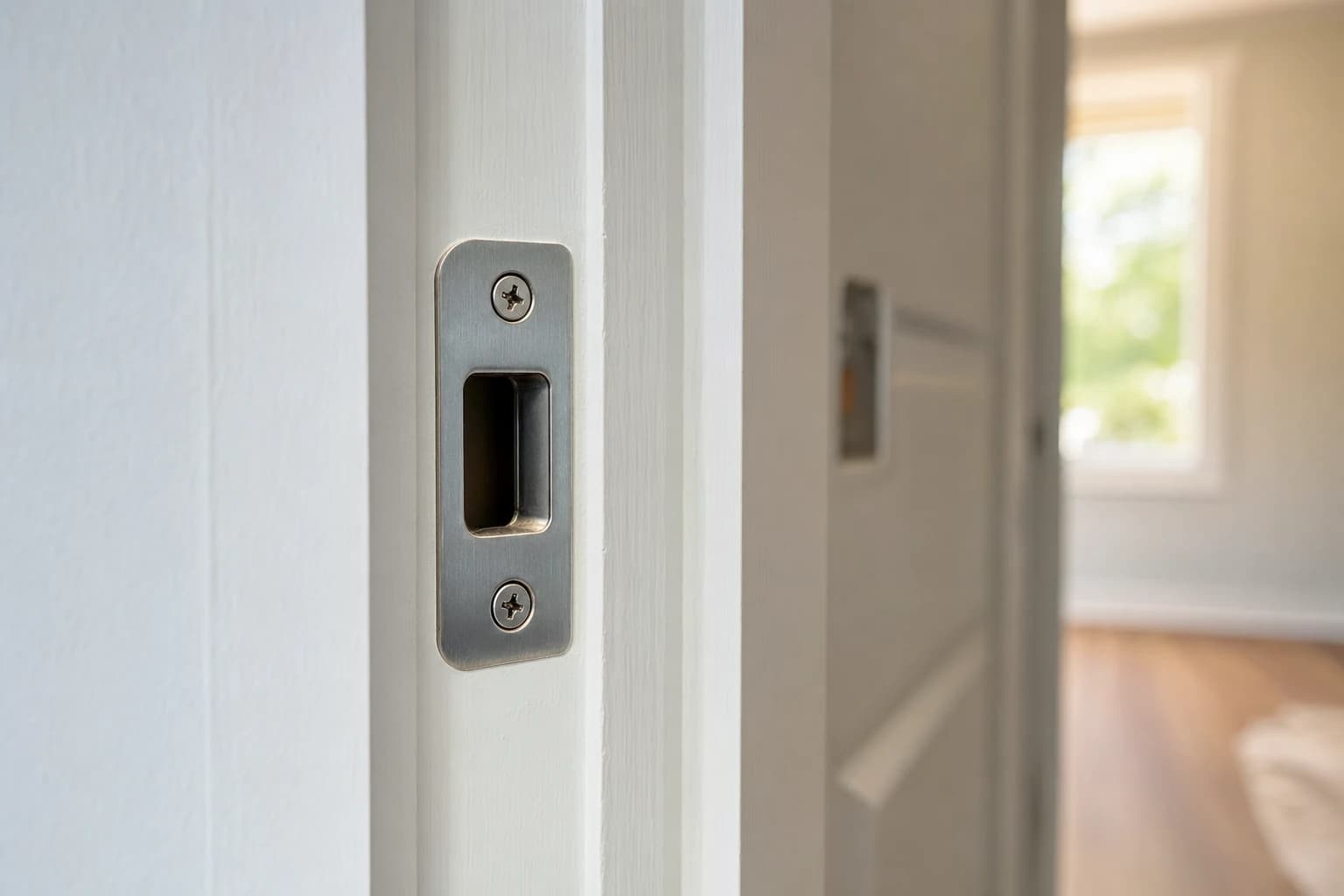
The latch is missing the strike opening, and that is one of the quickest fixes we do. Misaligned doors are almost always the cause, not a bad lock. The knob turns, the latch will not catch, and you lift or lean on the door to close it. There is usually a shiny wear mark on the strike plate where the latch has been hitting it wrong. A pencil mark on the latch tip shows exactly where it lands: too high, too low, or too far toward the stop.
Hinges get adjusted first, since a dropped door moves the latch. Then the strike plate gets shifted, its mortise deepened, or its opening filed so the latch enters cleanly. Warped doors are the one case adjustment cannot fix. A slab that has bowed in the sun so the middle sits away from the stop gets replaced.
A garage entry door or back door that will not latch is a security problem as much as a nuisance. Those calls get scheduled first. Better security on any exterior door is a strike plate held by long screws into the framing, and it takes ten minutes.
What Is the Fix for a Rotted or Damaged Door Frame?
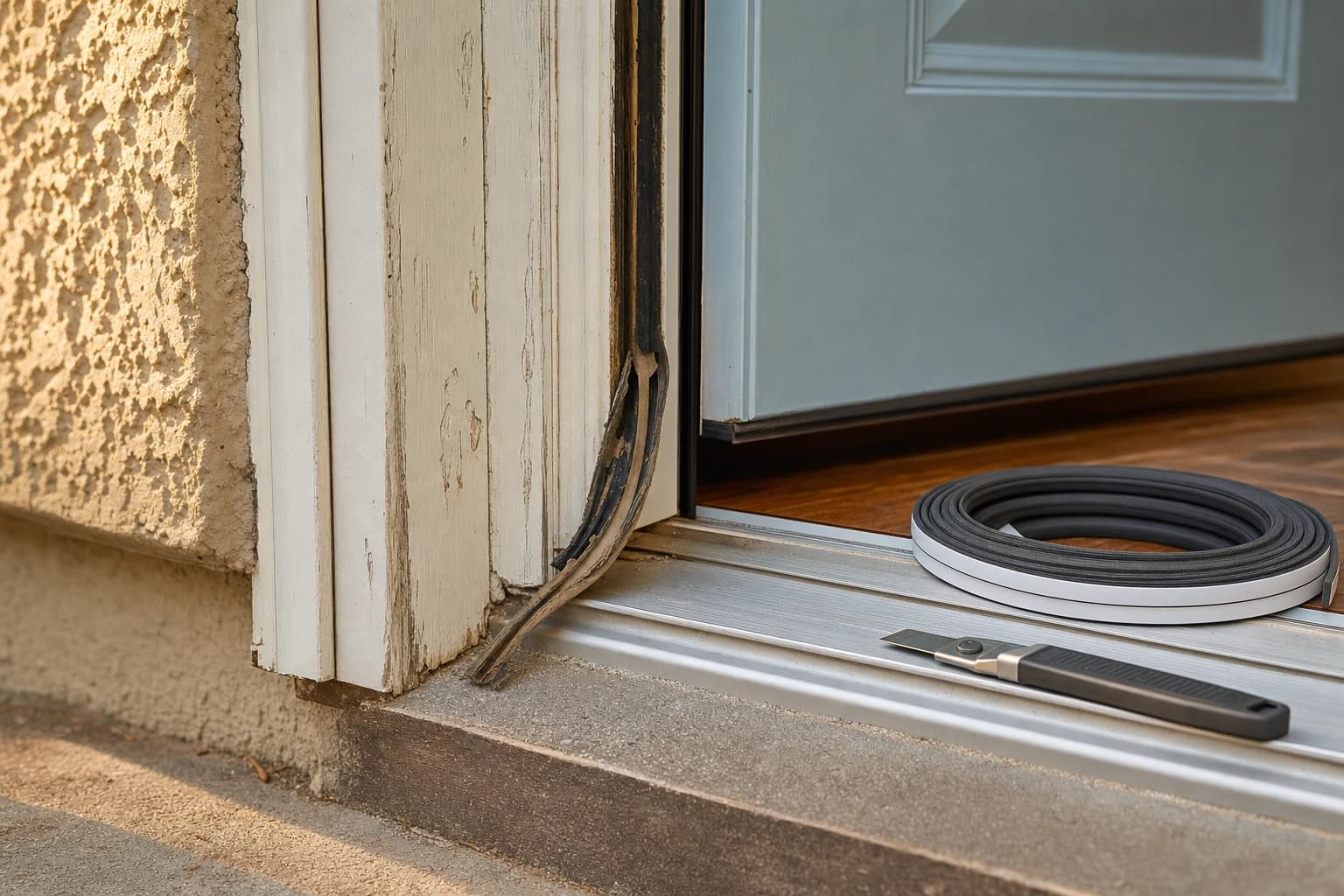
Frame first, then the door. The most common exterior failure in Florida is rot at the bottom of the door jamb. Failed caulk at the threshold or a cracked sill seal lets water sit in the lower corners, and the wood never gets a dry week to recover. The paint wrinkles, the trim goes spongy, and the miters open up at the sill. Homeowners can probe the bottom six inches of any exterior jamb with a screwdriver once a year.
When the rot stays in the lower jamb or the trim, we cut out the soft section, rebuild it, reseal the threshold, and rehang your existing door. When the frame is compromised, with lower jambs gone soft or split through, the fix is a prehung installation: new door, new frame, new threshold, set square and plumb, with the threshold pitched to shed water. One request this month was exactly that, a garage entry door and frame replaced together, and it was the right call. A new slab hung in a rotted frame is a new slab in a rotted frame.
Drafty doors are the other exterior complaint. Flattened foam and a hardened sweep let hot air, bugs, and the occasional lizard through the gap. New weatherstripping sized to the door, with the hinges adjusted so the door compresses it evenly, seals it without a new door. The cheapest energy efficiency fix on a Florida house is often a new door sweep. A coat of paint on the bottom edge of a wood jamb every couple of years is the cheapest door repair there is. Torn mesh, bent frames, and a closer that no longer controls the swing on a screen door are screen repair, and we check them on the same visit.
Are Bi-Fold Closet Doors Worth Repairing?
Often, and sometimes replacing the set is the smarter move. Florida closets eat hardware. A bi-fold is a top track, a pivot pin top and bottom, a guide pin in the track, and light hardware tying the panels together. Every piece of it is sensitive to daily wear and humidity. Three of the door requests this month were bi-fold door installation, which matches what homeowners ask for all year.
- Panels jump the track when the guide pin wears or the track has pulled loose from the framing.
- Doors scrape carpet or tile when floors were replaced with something thicker and the panels were never trimmed.
- Knobs sit at different heights because the pivots were set by eye.
- Doors fold in but never close flat because the pivots and the track are out of line with each other.
The repair that makes bi-folds operate smoothly is making sure the track is level and screwed into framing, replacing bent pivots and worn guides, setting the spring loaded pins for the right clearances, and trimming panel bottoms where the floor was raised. When several bi-folds in a house are the same age, replacing them as a set is usually the better answer. The hardware, the color, and the margins all match, and the handyman is already there. Sealing the top and bottom edges of a new bi-fold slows the warping that puts it back out of its track.
Can a Sliding Glass Door Be Repaired?
Not by us, and usually not for long by anyone, so we will be straight with you about it. By the time a sliding patio door is hard to open, the rollers are worn, the aluminum track is pitted by salt air, the seals have failed, and the glass is a generation old. Fixing one part buys a season, because the parts aged together and fail together. One request this month was a sliding door a lawn team had broken, and the honest answer for that door and for most old sliders in Florida is the same.
What we do instead is convert the opening to hinged French doors. The slider comes out, the opening is prepared, and the new doors go in with a proper frame, a new threshold, weatherstripping, and lock hardware sized to the opening. French doors seal better at the bottom, use hardware that can be replaced for decades, and lock the way a secure exterior door should. The details depend on the house, block wall or frame, the header size, and any step down to a lanai. All of it goes in writing before work starts.
Door Repair or Door Replacement: When Is a Door Past Fixing?
When the slab or the frame is past adjusting. We repair doors first, and most doors get repaired. A few need full replacement:
- A slab warped or twisted enough that no hinge adjustment makes it seal.
- A frame crushed or rotted so far that the damage runs into the surrounding wall.
- An exterior door that has failed as a security door: loose handles, a lock that will not hold, a jamb that gives when pushed.
- A door that has been planed and patched so many times there is nothing left to remove.
In each of those cases a new prehung unit goes into a sound, squared opening, with the threshold set to shed water and the weatherstripping fitted so it works from the first day. We do not work on overhead garage doors. Walk-through doors from the driveway or from the garage into the house are ours, and so is every door repair that comes before replacement is ever on the table.
How Do I Get a Door Repair Service Estimate?
Send the form on this page or call 800-931-1106, with photos if you have them. When you call, a person picks up, and if you leave a message we call back within one business day. Tell us the door type (interior, exterior, bi-fold, shower, screen, or a slider you want converted), what it does (sticks, sags, will not latch, drafts, broken glass), and whether the frame looks damaged. If several doors in the house have the same problem, say so. They usually get fixed on the same visit, and a window repair at the handyman level, a balance or a latch, rides along too. A sticking door plus a moldy bathroom plus a curtain rod is exactly the kind of list our handyman services are built for.
Estimates are free, with transparent pricing: the cost of the repair is in writing before work begins, and the quote you approve is the bill you get. Our own handymen do the professional door repair, and every repair or install carries a one year warranty. If something we did is not right, we come back and make it right. Licensed CRC1336072 and CBC1258366, insured, and bonded, which is what an HOA or a property manager asks about first. We have six Florida offices, in Tampa, Orlando, Jacksonville, Clearwater, Sarasota, and Melbourne, and the handyman who fixes your door lives in your part of the state. Whatever your door is doing, we would be glad to come take a look.