Can I Just Paint Over Wood Rot?
No, and the reason is water, not paint. Rot is wood that has been wet long enough for fungus to eat it. A coat of paint seals that moisture in, the wood keeps softening underneath, and the new paint lifts off in sheets by the next rainy season. You pay for the paint twice and the rot repair once anyway, only bigger, and your home's exterior looks worse than it did before the paint job.
It is one of the most common asks we get. In 62 estimate requests pulled from our website between September 4 and September 24, 2026, rotten wood came up on the trim beside a garage door, a front door frame and its sidelights, the molding on a window, and the fascia and soffit on a rear patio, and several of those requests asked for paint in the same breath. Every one of them was fixable, and the order below is how our handymen do it.
Is It Rot, or Just Peeling Paint?
Press a screwdriver into the bare spot. Sound wood pushes back and the tip barely marks it. Rot gives, the tip sinks, and the wood comes away in soft crumbs or long spongy fibers. Peeling paint over hard wood is a paint problem. Peeling paint over soft wood is rot, and the paint was the last thing holding it together.
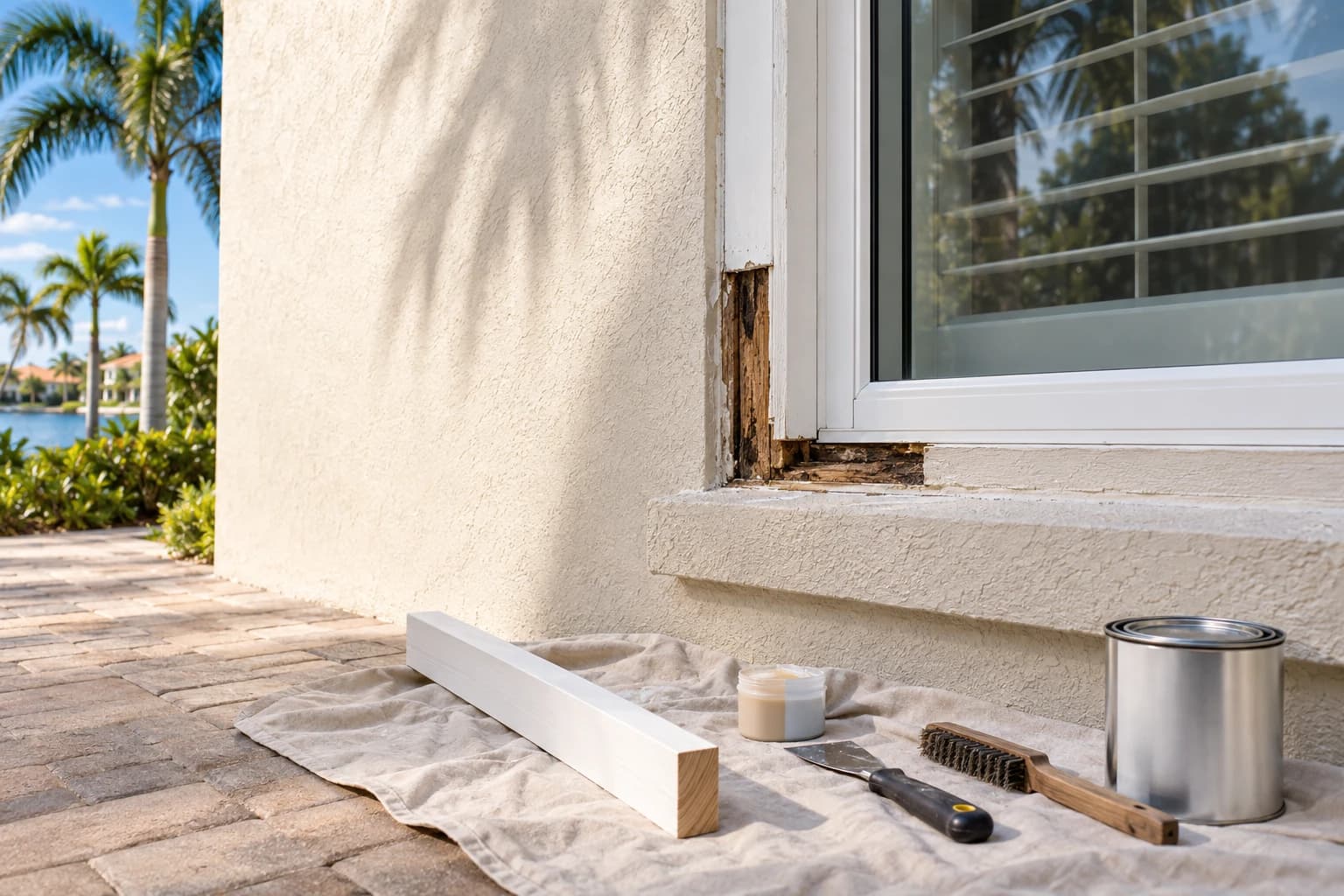
Rot hides in the same places on every Florida house, because water lands in the same places. Check the bottom of exterior door frames and the corners of the jambs, the bottom rail of window sashes and the outside sill, the trim on either side of a garage door, the fascia behind the gutter, corner boards where two walls meet, the bottom of siding near a hose bib or a sprinkler head, and any deck post that touches the ground. Stucco cracks feed the same problem from the other side, letting water into the wood framing behind the wall.
Dark stains and paint that bubbles in one stretch while the rest looks fine are the early signs. Wood that has gone gray and checked in the sun is next. By the time a board sags or a corner falls off in your hand, the rot has been in there for years and has probably spread past what you can see.
Is It Dry Rot or Wet Rot?
Both are the same problem with a misleading name, and the repair is the same. Dry rot is a fungus that eats damp wood and leaves it dry, brittle, and cracked into small cubes, and it can spread through the surrounding wood well past the spot that got wet. Wet rot stays where the water is: a soft, dark, spongy patch at the bottom of a door frame or a window sill. In Florida, with humidity most of the year and rain most afternoons in summer, wet rot is the common one. Dry rot shows up in attics, crawl spaces, and behind stucco, where there is poor ventilation and no way for moisture to escape.
Dry rot repair and wet rot repair follow the same order. Find the moisture, cut out the compromised wood past the last soft fiber, replace the damaged wood or fill the pocket, seal it, and paint it. The name changes one thing: with dry rot the handyman probes the surrounding wood too, because the fungus travels.
What Is the Right Order for Rot Repair and Painting?
Water first, wood second, paint last. Every step protects the one after it, and skipping one is why repairs come back.
- 1
Find where the water comes from
Rot has a source: a gutter that overflows onto the fascia, a sprinkler head that hits the siding twice a day, caulk that opened up around a window, a door with no sweep, or dirt piled against the bottom of a post. Fix the source or the new wood rots the same way. A gutter that overflows is behind most of the fascia rot in Florida.
- 2
Cut back to sound wood
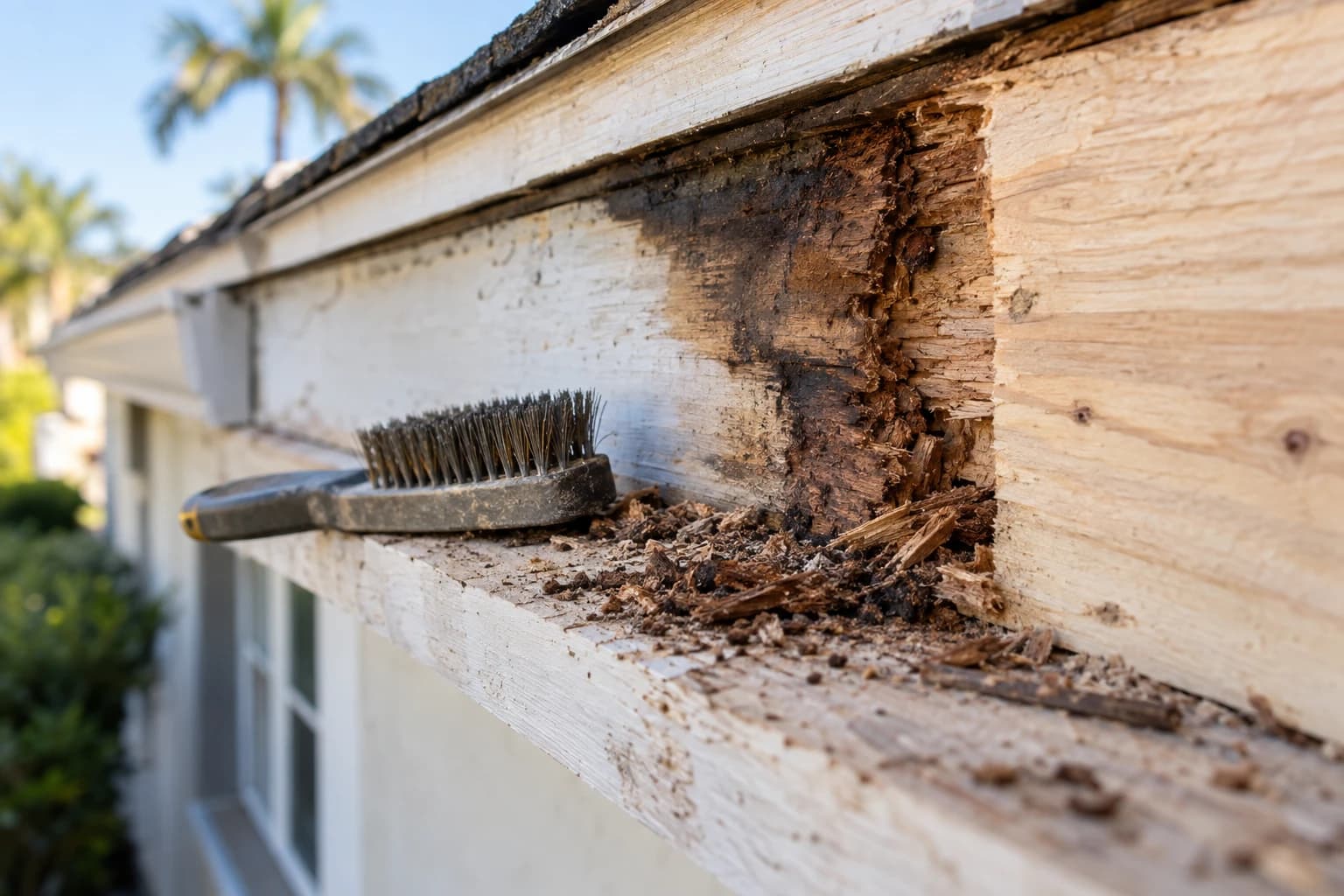
Rot rarely stops where the stain does. The soft section comes out to solid wood on every side, loose fibers come off with a wire brush, and the handyman probes past the edge to make sure. On a fascia run that can mean a whole board. On a door frame it is often the bottom foot of the jamb and the sill under it.
- 3
Rebuild or fill, depending on the size
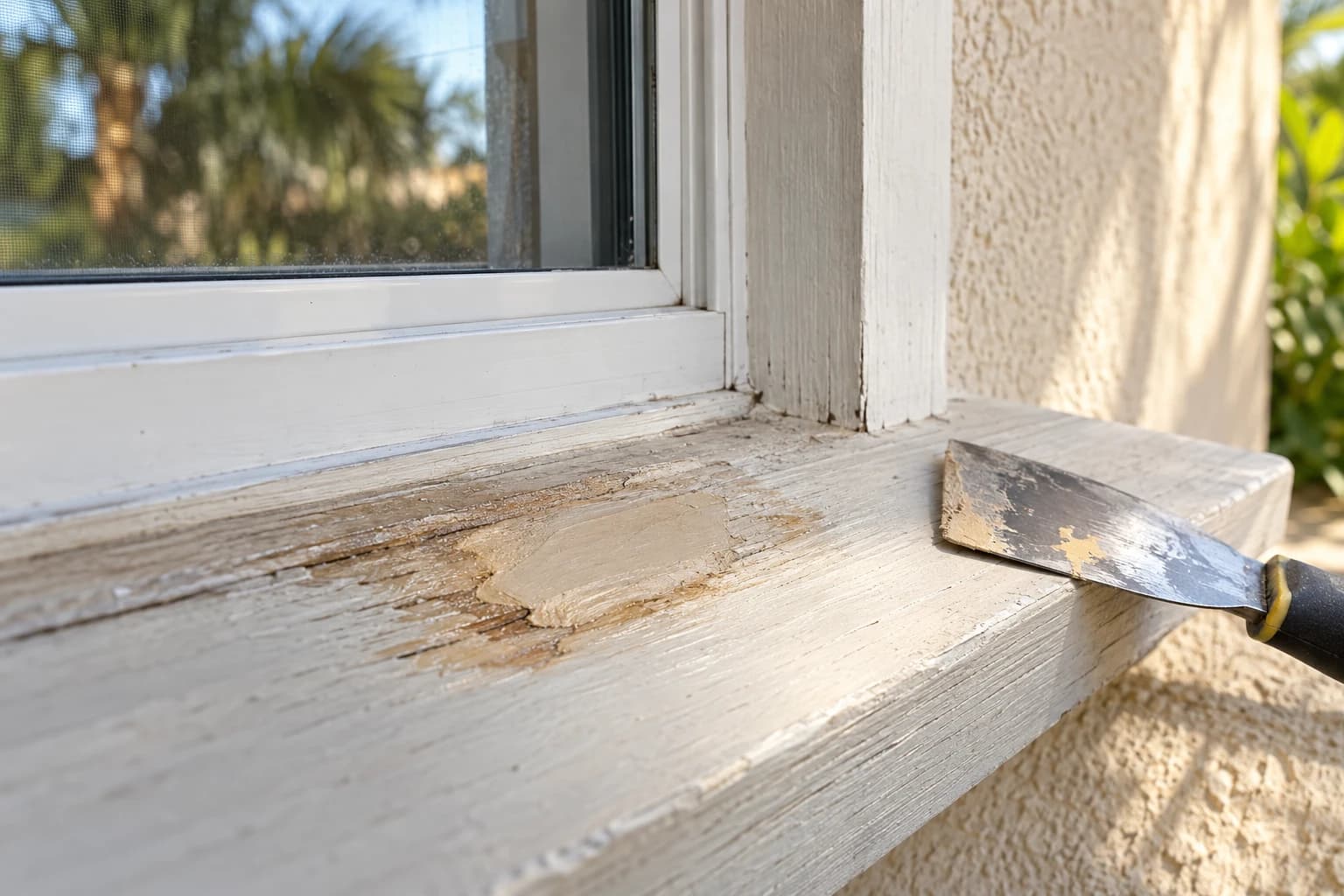
A small pocket in a window sill or a piece of trim takes a wood hardener to firm up the fibers, then a two-part wood epoxy, which cures hard and can be sanded to a smooth surface flush with the board. Anything bigger, anything that goes across a joint, and anything that carries a load gets replaced. Chronically wet spots get PVC trim or pressure-treated wood instead of the same pine that just failed.
- 4
Prime every side, including the cuts
New wood gets primed on all six sides before it goes up, and every cut end and end grain gets sealed, because end grain drinks water like a straw. This is the step a rushed job skips, and the step that decides whether the repair lasts.
- 5
Caulk the joints
Every joint between the new piece and the wall, the window, or the next board gets a bead of exterior caulk, tooled smooth. Water gets in at the joints, not through the face of the board.
- 6
Paint, two coats, in dry weather
Exterior paint goes on over the cured primer in two coats, on a day the wood is dry and the afternoon storm is not due. In Florida that usually means the dry season, or a morning start in summer. Our painters wash and treat any mildew or mold on the wall first, because paint over mildew does not last either.
Should the Rotted Piece Be Replaced or Patched?
Replace it when the soft spot goes through the board, crosses a joint, or is on a piece that holds weight. Patch it with epoxy when the pocket is shallow, the rest of the piece is sound, and the piece would be hard to match, like an old window sill or a decorative trim profile in an older home.
The material for the replacement matters as much as the repair. Fascia and trim in a spot that stays wet, like behind a gutter or at the bottom of a post, do better in PVC, which cannot rot. Pieces that get sun but not standing water are fine in primed pine or cedar. Deck framing and anything near the ground gets pressure-treated lumber rated for ground contact. Our handymen carry the right stock for each, and the written price says which one you are getting.
When Should the New Wood Be Painted?
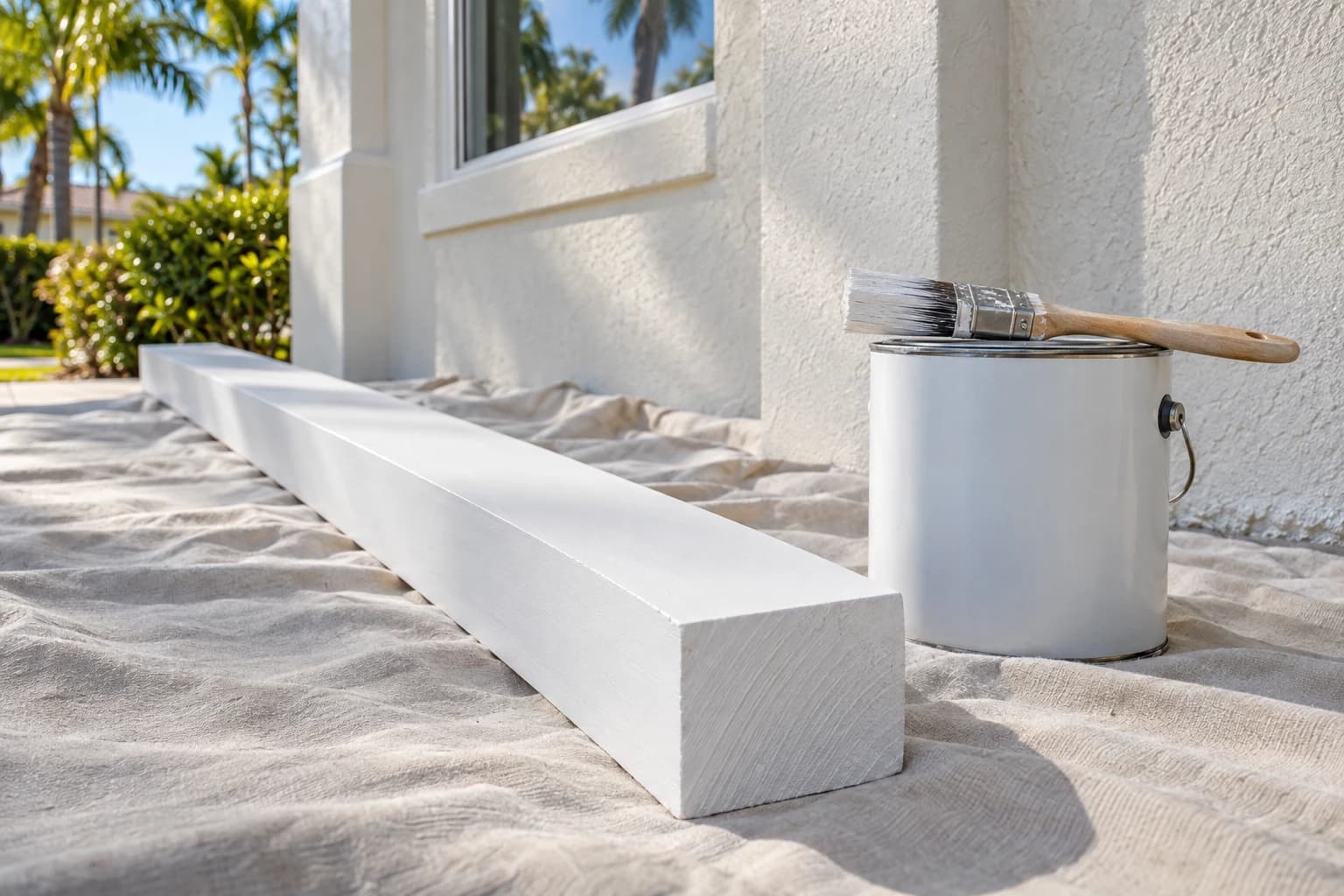
As soon as the primer has dried, which on a dry Florida day is often the same visit. Bare wood left unpainted starts drinking water the first afternoon it rains. Primed wood can wait a few days for the paint. What it cannot do is wait through a wet week with nothing on it.
Whole-house exterior repaints are a dry-season job, roughly November through May, so the coats cure instead of fighting humidity. Spot repairs happen year round because the alternative is leaving the wood open. Sprinklers get turned off the day before and the day of. Pressure washing the wall before a repaint takes the chalk and mildew off so the paint can grip.
If you are planning to repaint the whole house, the rot repair goes first, as its own line on the estimate. Painters who find rot mid-job either stop and wait for a carpenter or paint over it. Our handymen carry both trades, so the fascia gets rebuilt in the morning and painted in the afternoon.
Which Rot Jobs Are Handyman Work, and Which Are Not?
Anything below the roof that is trim, siding, a door, a window, or a deck board is handyman work, and our handymen do it every week. That covers fascia and soffit, corner boards, window sills and trim, door frames and sidelights, garage door jambs, sections of siding, stucco patches, deck boards and rails, fence posts, and the wood rot and stucco repair that ties them together.
Rot that has reached the structure is contractor work. Rafter tails behind the fascia, floor joists under a soft bathroom floor, a load-bearing post under a porch roof, or wall framing behind a stucco crack are not a handyman job under Florida law. The Handyman Company holds contractor licenses CRC1336072 and CBC1258366, so when the probe goes deeper than trim, the same company can quote the framing and pull the permit. The roof itself, shingles and decking, belongs to a roofer, and we say so at the estimate. The Florida license rules show the line in detail.
What Moves the Price on a Rot Repair?
How far the rot runs, what the new piece is made of, and how high it is. A rotted window sill at ground level is a short visit. A run of second-story fascia over a pool cage needs staging and a full day. PVC costs more than pine and never needs this repair again. Painting the repair to match adds a line, and painting the whole wall so the patch does not show adds another.
There are no dollar figures here on purpose, because two rotted door frames can be very different jobs. How we price handyman work is the same for all of them: a free estimate, a written price that covers what we found, and a separate written price for anything hidden that turns up once the board is off. The quote you approve is the bill you get.
How Do I Get Started?
Take a photo of the soft spot and send the form on this page, or call 800-931-1106. A person answers, and a message left after hours gets a call back within one business day. Someone comes out, probes the wood, finds the water, and puts the whole repair in writing before any of it starts. If the painter is already booked, we work ahead of them.
Our carpenters and painters work directly for the company from six Florida offices in Tampa, Orlando, Jacksonville, Clearwater, Sarasota, and Melbourne. Every repair carries a one year warranty, and if a piece we replaced is not right, we come back and make it right. Rot looks worse than it is. Let us take that one off your hands.