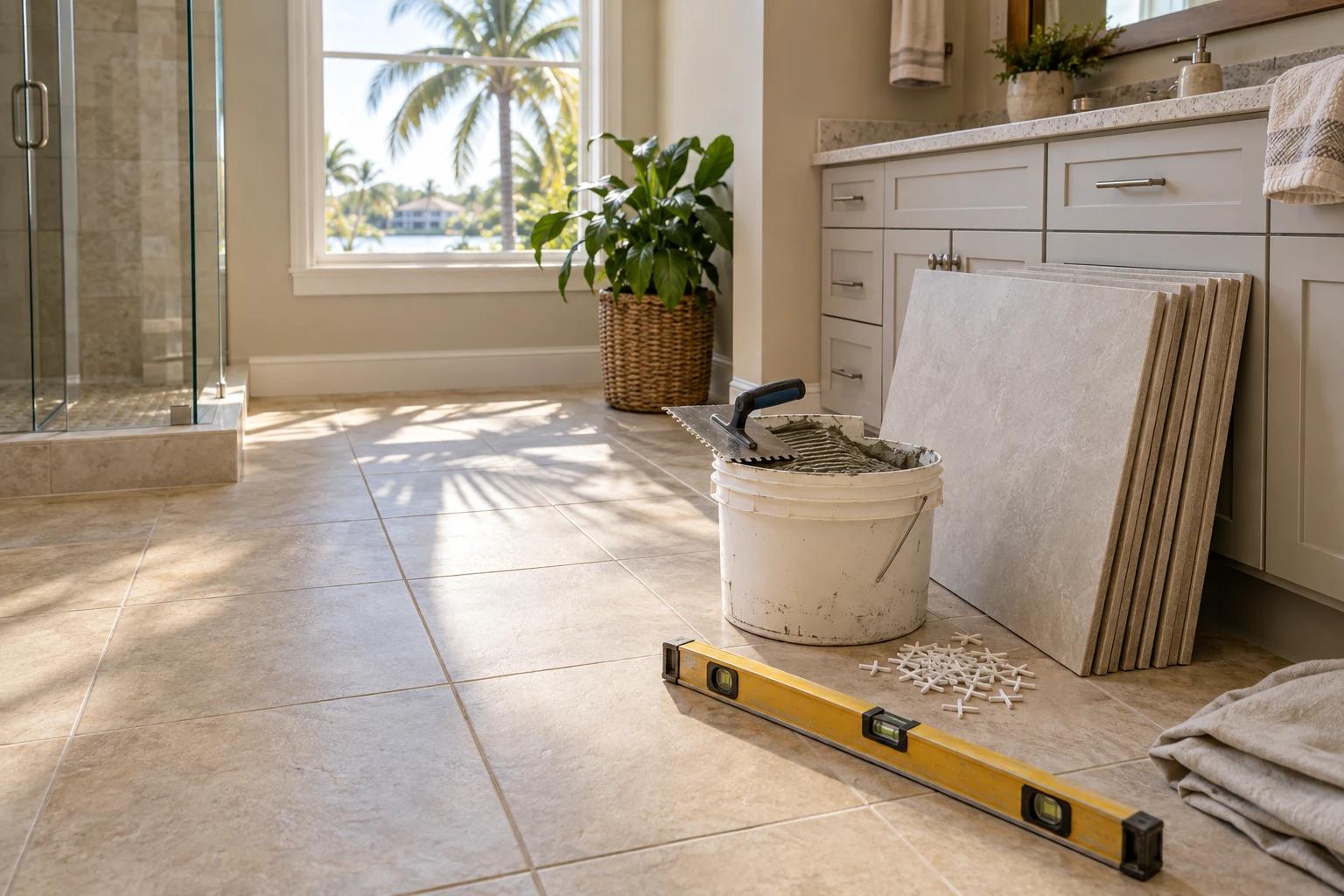
Can You Really Lay New Tile Over Old Tile?
You can, when the old tile is a good base. New tile needs a surface that is solid, flat, clean, and dry.
Tearing out tile is loud work, and the dust and mess drift through the house. Before the holidays, skipping it sounds like a gift.
But the new tile is only as good as the tile under it. If the original tile lets go, the new tile on top of it goes with it.
Bathrooms and floors are steady work for us. In 80 estimate requests pulled from our website between October 8 and November 5, 2026, bathroom repairs came up 14 times and flooring 11 times.
How Do I Know If My Old Tile Is Solid Enough?
Before installing tile over tile, five quick checks help you decide.
| What to check | Good sign | Old tile comes up |
|---|---|---|
| Tap every tile with a coin or a knuckle | A solid, sharp sound everywhere | A hollow sound on more than a few tiles |
| Press and step on each tile | Nothing moves or clicks | Tiles rock, click, or lift at the edges |
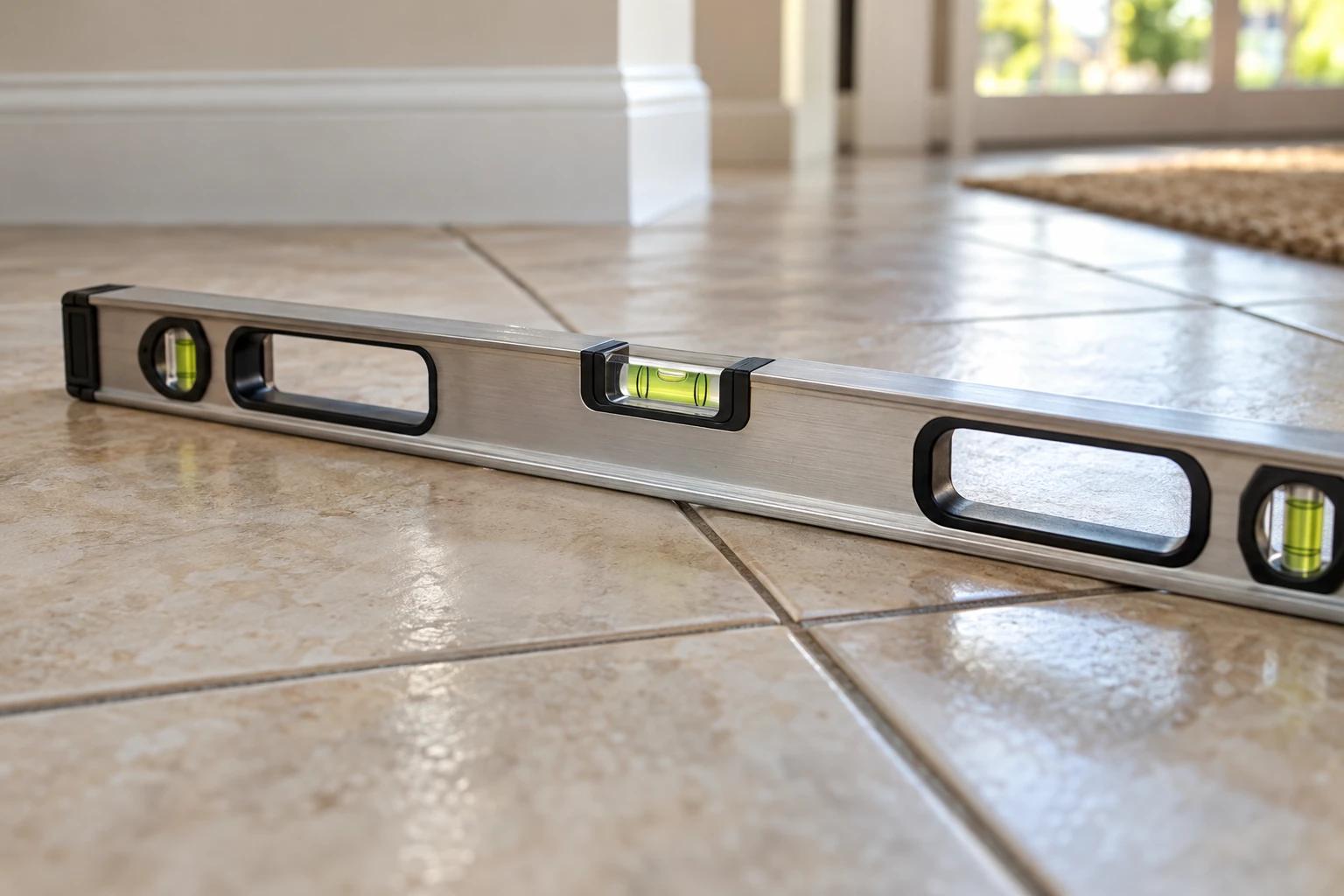
| Lay a long level or straight board across the floor | The board sits flat with small gaps at most | Humps, dips, or tiles with raised edges |
| Look for cracks | No cracks, or one cracked tile | A crack that runs across several tiles in a line |
| Check for water and smells | Dry grout, firm walls, no musty smell | Soft spots, dark grout, or a smell that cleaning never fixes |
Checks before new tile goes over old
A crack that runs in a straight line across several tiles usually follows a crack in the slab below. New tile laid over it cracks in the same line. That floor needs the slab looked at first.
A few hollow or cracked tiles do not always end the plan. Those tiles can be reset, or a replacement tile set in, with a floor tile repair, and then the floor is ready. A spare tile from the garage is the best match. Learning how to fix chipped tile covers the small surface chips you can handle yourself.
Is It Safe to Tile Over Old Shower Tile?
In a shower, the answer depends on what is behind the tile. Tile and grout do not keep water out of the wall. A waterproof layer behind them does that job.
If that hidden layer is sound, new tile can look great. If water is already getting through, new tile only hides the problem for a while.
Watch for loose tiles, grout that crumbles, caulk that has turned dark, or a wall that feels soft when you press it. Any one of those means the wall comes first.
One Orlando customer learned this the hard way, just before a visit: "The heat and moisture were too much and the soap dish and adjacent tiles fell off the wall. When I looked the entire area seemed saturated with moisture. I had company arriving in less than a week and the only other bath is in my bedroom." (Richard Hartman, Google review of the Orlando office, December 18, 2013)
Caught early, the fix may be shower tile repair with new grout and caulk. When the wall behind the tile is wet or soft, it gets rebuilt as part of a bathroom remodel, and the shower is waterproofed before new tile goes up.
Will a Second Layer of Tile Make My Floor Too High?
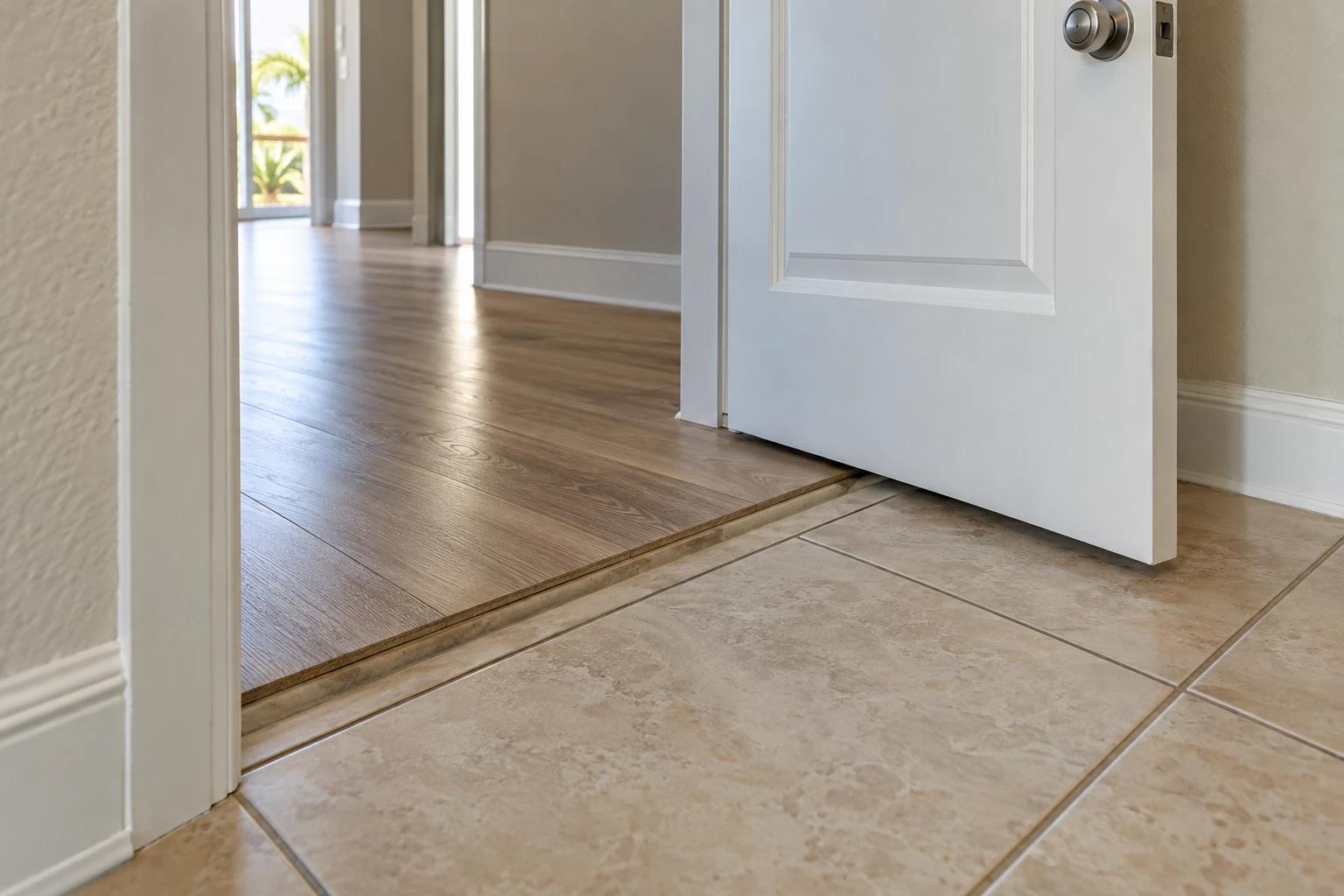
It adds more height than most people expect, and that height shows up in a few places. The new tile flooring and the thin-set under it both add up. Follow the product label for your tile.
- Doors. A door that cleared the old floor may drag on the new one.
- Thresholds and other rooms. Where the new tile meets carpet, wood, or vinyl, there is now a step. A transition strip can smooth it, but a tall step can catch a toe.
- Toilets. The toilet comes off, and it has to seal again at the new floor height. If the drain fitting ends up sitting too low, that part is a plumber's job.
- Appliances. A dishwasher tucked under the counter may not slide out again once the floor rises around it.
A new toilet set at the new height and a door that sticks trimmed to clear are both ordinary jobs for our handymen.
When Does the Old Tile Have to Come Out First?
When the base is the problem, new tile flooring cannot fix it. Here are the times the old floor comes up.
- Many tiles sound hollow, rock, peel up at the edges, or have lifted into a tent.
- The floor is not flat, and the old tile has high edges or humps.
- Cracks run across the room in a line, a sign the slab is moving.
- A shower wall is wet, soft, or smells musty.
- The added height would trap a dishwasher or leave a tall step at a doorway.
- The floor has already been tiled over once before.
A Clearwater customer saw why that matters. They had to "tear out a badly laid tile floor, grind off the thinset, and start from scratch." (J R, Google review of the Clearwater office, December 28, 2016)
With flooring installation, the old floor comes out, the bare concrete slab gets checked for moisture and flatness, and the new tile goes down on a sound base.
What Tools and Materials Does Tiling Over Tile Take?
More than most people expect for installing tile, though nearly all of it sits in the tile aisle of any home store.
- A tile cleaner or degreaser and a scrub pad.
- A sanding block or a bonding primer made for glazed tile.
- Thin-set mortar labeled for use over existing tile, and a drill with a mixing paddle.
- A notched trowel in the size the mortar bag calls for.
- Plastic tile spacers, so the spaces between tiles stay the same width.
- A long level and a chalk line to mark your layout.
- A rubber mallet. A hammer is too hard on new tile.
- A tile cutter or wet saw.
- An oscillating tool to trim door casings, and a utility knife to cut out old caulk.
- Grout, either a bag you mix or pre-mixed grout, with a grout float and a damp sponge.
- Painter's tape, knee pads, and plastic sheeting to keep the dust in one room.
What Are the Steps for Laying Tile Over Tile?
The first step is prep, and it is most of the work. Here is the general process when the old tile passes every check. The labels on your bags have the final say on every amount and every wait.
- 1
Fix what failed
Reset any hollow or cracked tiles, and grind down high edges. The original tile has to be flat and solid before anything goes on top of it.
- 2
Clean and degrease
Scrub the whole floor with a tile cleaner to cut soap film, wax, and grease. Rinse it, wipe it down, and let it dry. Nothing will adhere to a dirty surface.
- 3
Scuff or prime the glaze
Glazed tile is too slick to grip well. Sand the shine off with a sanding block, or roll on a bonding primer made for tile over tile. Then vacuum up every bit of dust.
- 4
Plan and mark the layout
Find the center of the room and mark two straight lines that cross there. Dry fit a row of tiles along each line with spacers, and shift the layout so you do not end with a thin sliver at a doorway.
- 5
Mix the thin-set
Mix it to the consistency the bag describes, and mix only what you can use before it starts to set. A batch mixed correctly holds its ridges when you comb it.
- 6
Start laying at the center
Spread the thin-set with the flat side of the trowel, then comb it with the notched side in straight lines. Start laying the first row at your center lines and work back toward the door. Press each tile down with firm, even pressure, twisting it slightly, and set spacers at the corners.
- 7
Check as you go
Lay the level across every few tiles. Now and then, pull up a fresh tile to see that its back is fully covered.
- 8
Trim the doors and edges
Cut the edge pieces to fit, and leave the gap at the walls that the label calls for. Trim the bottom of the door casings so the new tile slides under them cleanly.
- 9
Wait, then grout
Let the thin-set cure for the full time on the bag before grouting. Pull the spacers first. Finally, grout, clean, and caulk the edges.
Installing tile is a long day on your knees, and the room is off limits until everything cures. If you would prefer not to take it on, we would be glad to come take a look.
Which Thin-Set Holds New Tile on Old Tile?
Look for a thin-set mortar whose label says it bonds to existing ceramic tile or glazed surfaces. Plain thin-set may not grip a glazed face.
Large tiles and natural stone need their own kind too, and the bag says so. Use the trowel size the label asks for. A trowel that is too small leaves hollow spots, and hollow spots crack.
Skip the premixed adhesive in a tub for a floor. It is made for small wall tile.
How Do I Clean Off Excess Grout Without Pulling It Out?
Work in small sections, and keep the sponge damp, not wet. Use sanded grout for wide joints and unsanded grout for narrow ones, or a pre-mixed grout.
Applying grout is simple once you see it done. Hold the rubber grout float at an angle and press the grout into the joints. Then drag the float across the tiles on a diagonal to scrape off the excess.
Wait the short time the bag gives, then wipe the haze with a damp sponge. Rinse the sponge often and wring it out well. A dripping sponge washes grout out of the joints.
Caulk, not grout, goes where the floor meets the tub or a wall, because those corners move. A tile grout repair uses the same steps when only the grout is tired.
Can a New Backsplash Go Over the Old One?
It can be done, but it rarely looks right, and we do not do it. The extra thickness shows at every outlet, at the end of the run, and under the cabinets.
So the old kitchen backsplash comes off, and the wall behind it is patched flat. Then the new tile goes up straight, cut clean around the outlets.
A Tampa customer had it done that way: "The Handyman Company was very competitively priced in removing a 17 year-old travertine backsplash and installing new subway tile backsplash. They did great work, and we will hire again for other projects!" (Pam Stone-Beeman, Google review of the Tampa office, December 19, 2020)
A new backsplash often comes with fresh paint, hardware, and lights in a kitchen refresh.
Can Vinyl Plank or Laminate Go Over a Tile Floor?
Often, yes, and it is one of the easier ways to cover old tile flooring. Vinyl plank and laminate float over the floor. The planks lock together and are not attached to the tile. So the old tile only has to be flat and solid, not perfect.
Deep grout lines can show through thin planks over time. Some flooring makers call for filling the grout lines first, or for a certain underlayment. Follow the instructions for your floor, because they decide the warranty.
Vinyl plank handles water well. Laminate belongs in the drier rooms, not a bathroom. The same height checks apply at doors and appliances.
What If the Holidays Are Close and the Tile Is Tired?
Sometimes the room does not need new tile at all. New grout and fresh caulk can make dingy tile look clean again.
One handyman can do the tile and the rest of the list in a visit. Our own handymen do the work, not a stranger from a lead site.
Call 800-931-1106 for a free estimate. A person answers, and if you leave a message we call back within one business day. We tell you plainly whether the old tile can stay. You get the price in writing before work starts, and the quote you approve is the bill you get. You can read what moves the price of a handyman job or what our customers say before you call.