

What Breaks First in a Florida Storm?
The soffit, then the gutters, then the screens, and the ceiling inside a week later. Here are 60 estimate requests pulled from our website between September 4 and September 24, 2026: drywall, ceilings, and water damage topped the list at 19, and exterior rot, soffit, stucco, gutters, and screens added 10 more.
| Where | What to look for | Who fixes it |
|---|---|---|
| Soffit and fascia | Loose or hanging panels, stained or soft fascia, daylight through the soffit | Handyman |
| Gutters | Water running behind the trough, sagging runs, downspouts dumping at the slab | Handyman |
| Lanai and porch screens | Torn panels, a screen door that will not close | Handyman, for the walls and doors |
| Fences and gates | Leaning posts, a gate that no longer latches | Handyman |
| Doors and seals | Daylight under the door, water at the threshold, swollen jambs | Handyman |
| Ceilings and walls inside | A brown ring, sagging board, tape letting go at the seams | Roofer or plumber stops the water, then handyman |
| The roof | Missing shingles, lifted flashing | Roofer, always |
What the wind and rain get to first
What Should I Check Before a Storm?
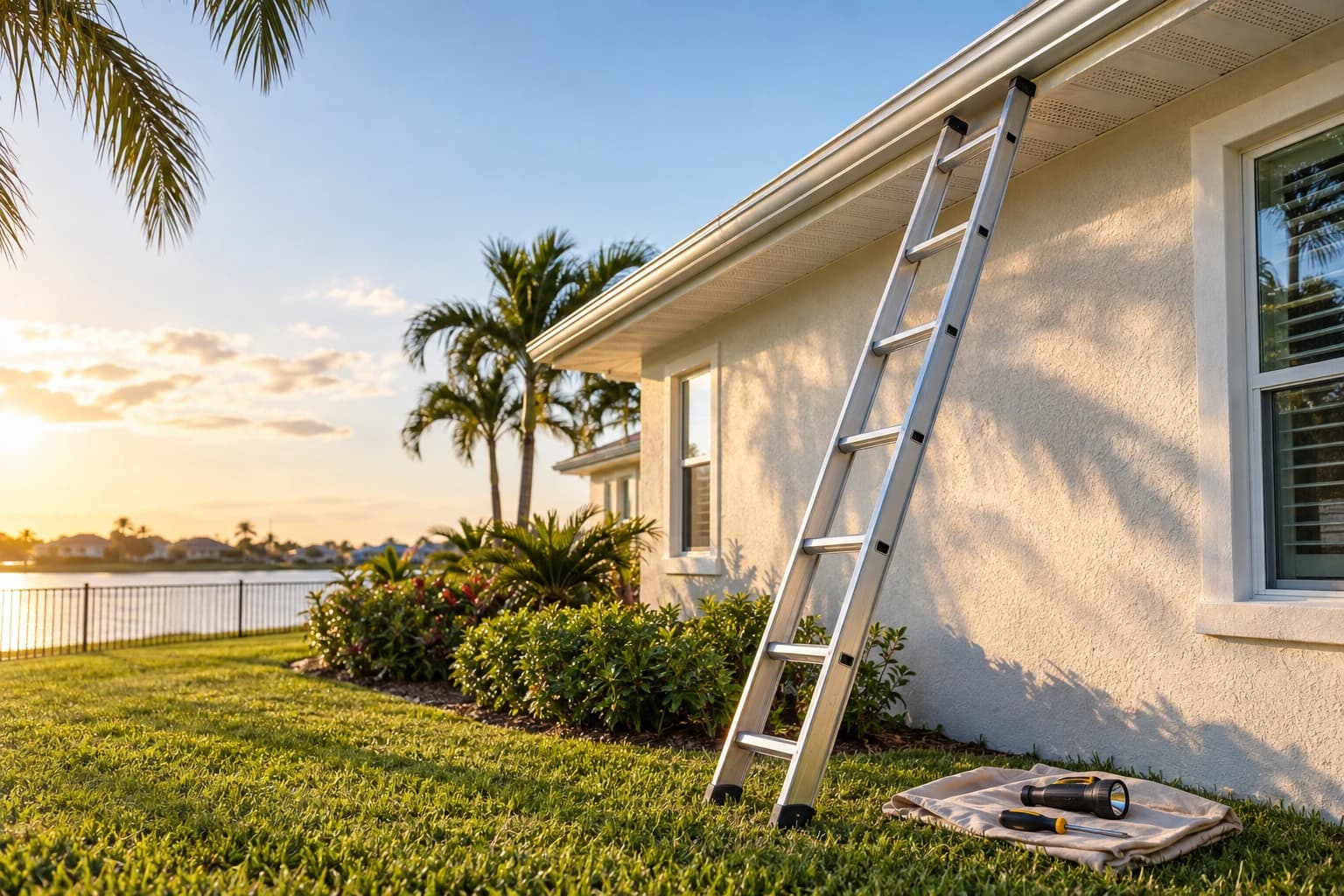
The edges of the house, because that is where wind gets a grip. Hurricane preparedness for the house itself is ten minutes with a flashlight and a screwdriver, and it tells you most of what you need to know.
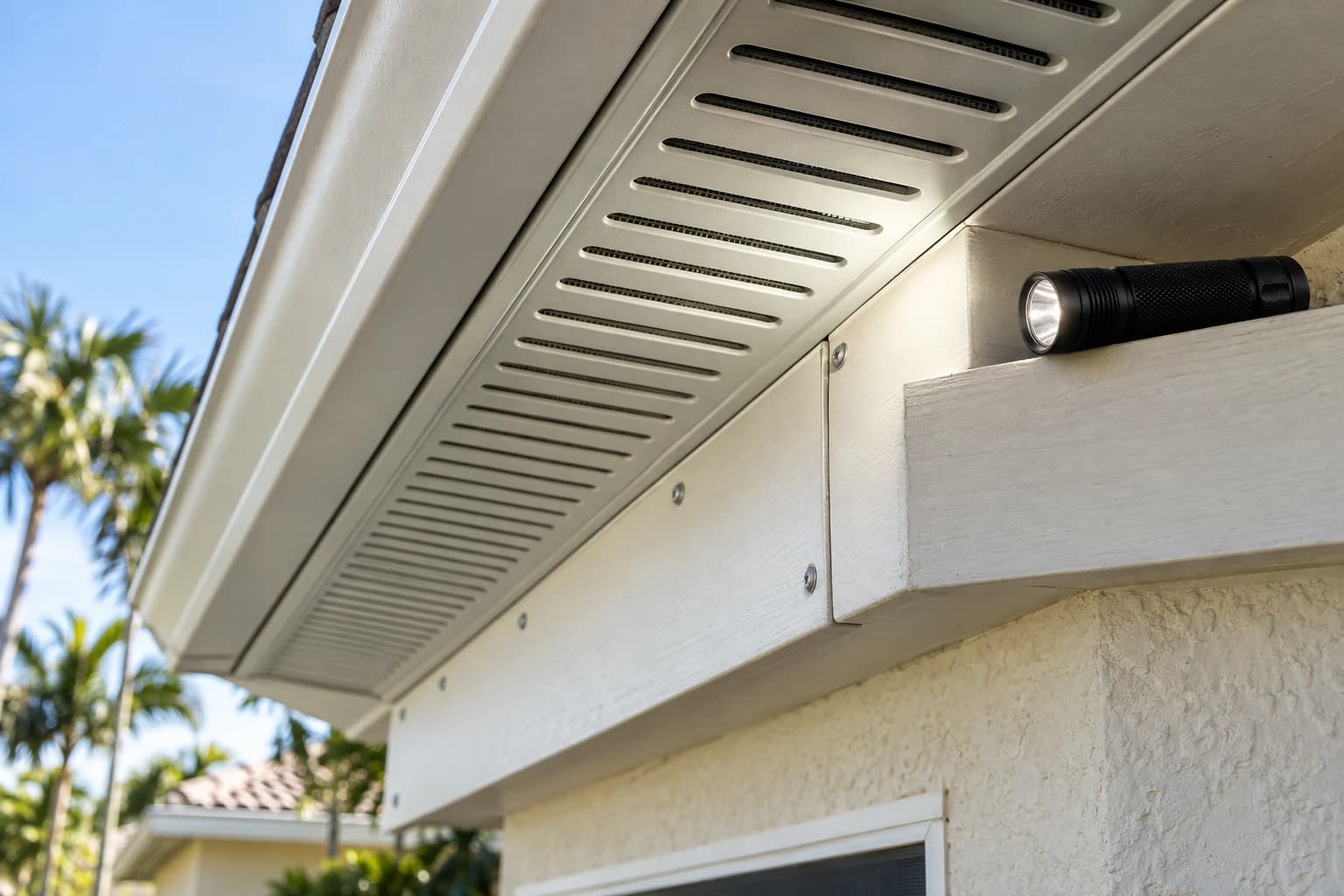
- Walk around the house and look up at the soffit. A panel that is loose before the storm is the one that peels first. Press the fascia with a screwdriver; sound wood pushes back.
- Look in the gutters. A clogged run overflows into the fascia, and a downspout that dumps at the slab pushes water toward the foundation.
- Check every exterior door for daylight underneath and a threshold that seals. A swollen jamb or a worn sweep is where wind-driven rain gets in.
- Push on the fence posts. A post that moves in dry weather will lean in wet ground with a wind load on the panels.
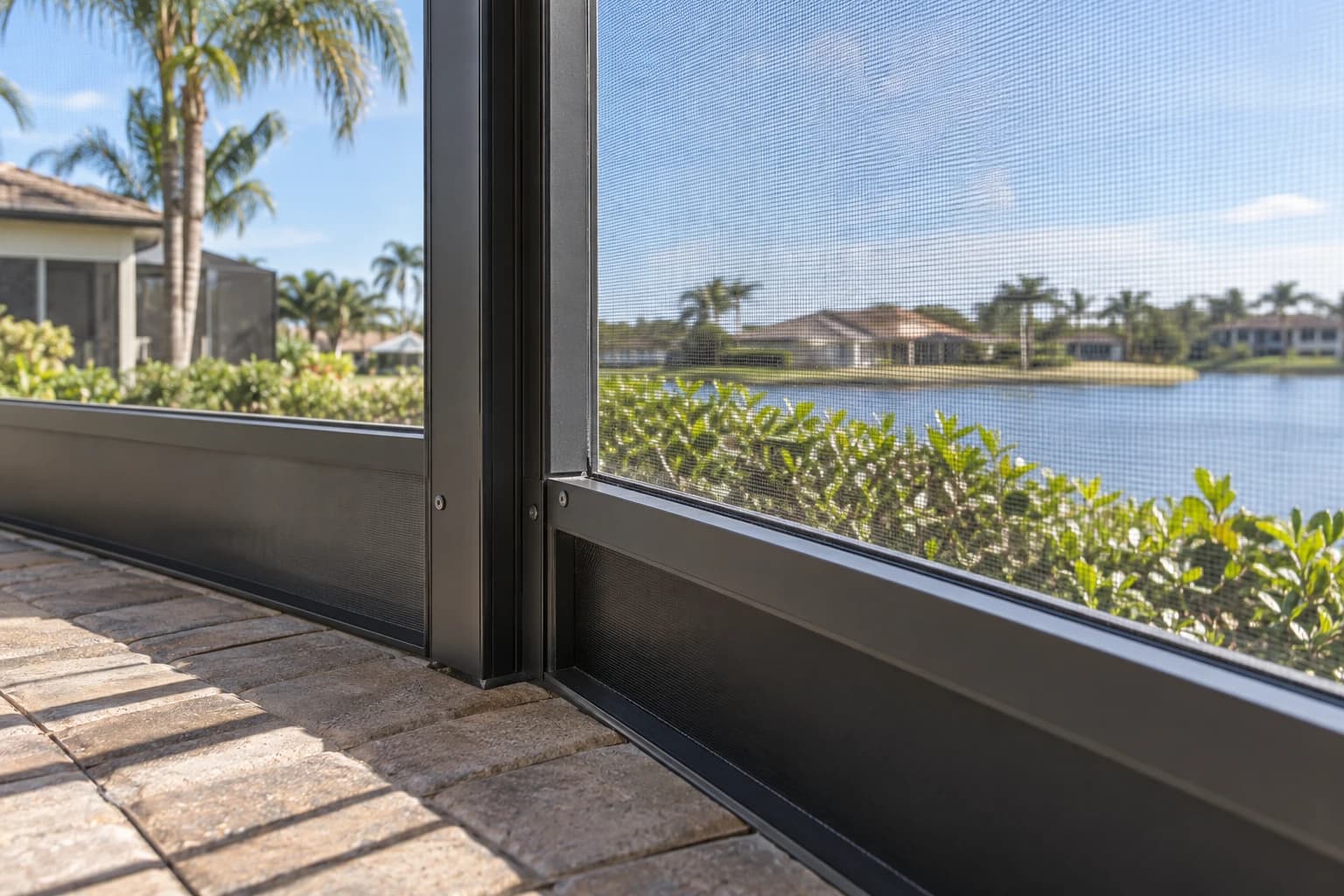
- Look at the lanai screens and the screen door. One torn panel becomes six when the wind gets behind it.
- Take a photo of every ceiling. A clean picture from before the storm settles any question about what a leak did.
Every item on that list is a single job we take, and several of them fit on one written price the same week. Soffit and fascia is the one to do first, because tight soffit and fascia are the cheapest insurance on the list.
What Should I Check After a Storm?
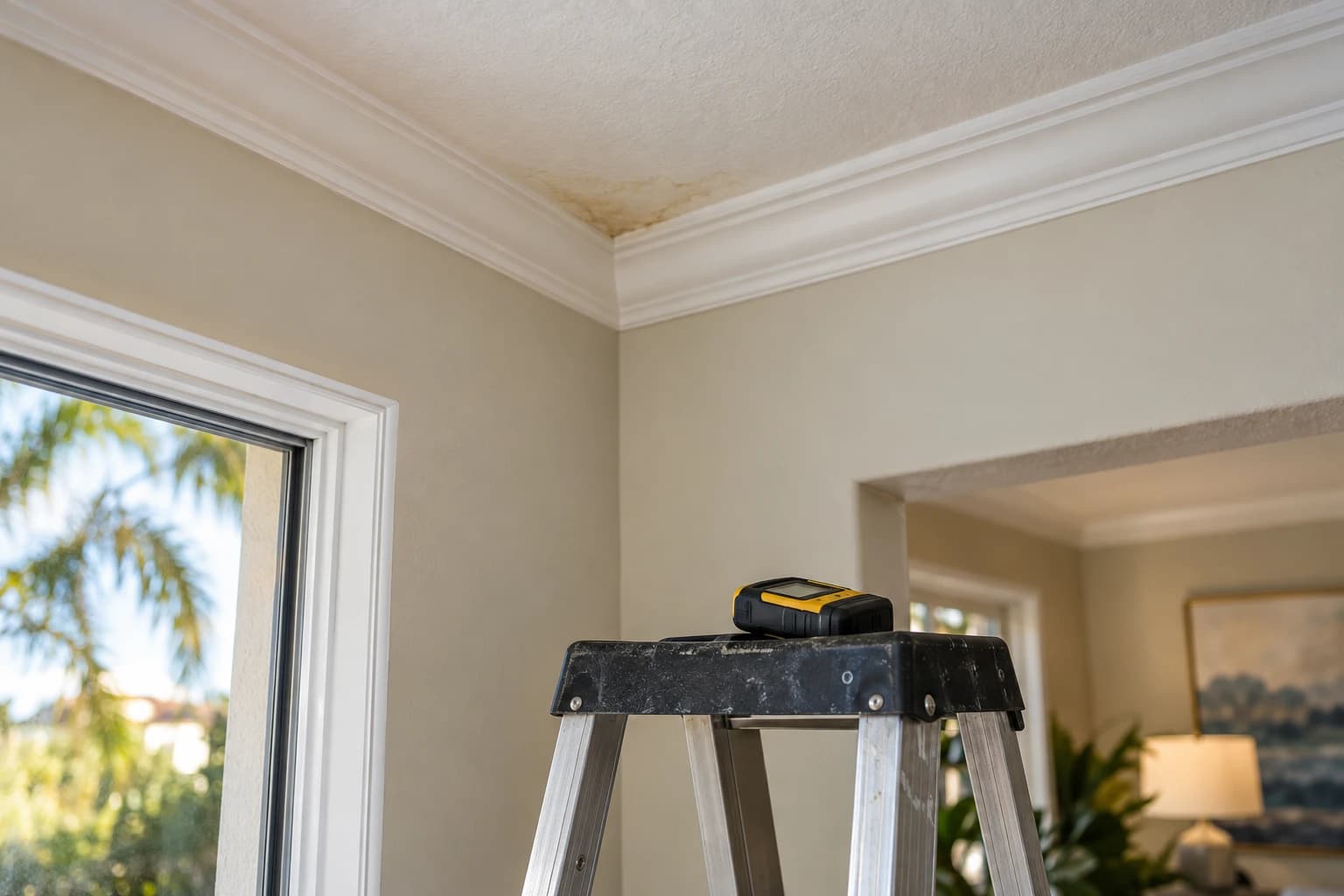
The same edges, plus the ceilings, and the ceilings are the ones that wait. Water that got in during the storm shows up as a brown ring or a sag days later. Look up in every room, the garage included.
- Ceilings and walls: a stain, a sag, or tape lifting at the seams means water got in. Find the source first.
- Soffit and fascia: hanging panels, gaps under the eaves, and anything on the lawn that used to be on the house.
- Gutters: runs pulled loose, water running behind the trough, downspouts gone.
- Screens: torn or missing panels on the lanai walls and the screen door.
- Doors and windows: water at the threshold, a door that will not latch, caulk gone around a window.
- Stucco and trim: cracks that let water into the wall, a balcony or planter where water now pools.
A roofer stops a roof leak, and a plumber stops a pipe. Once the water has stopped, the ceiling is one of the most fixable things on the list: cut back to dry framing, new board, texture matched, paint. A wet ceiling is less scary than it looks, and one September request was exactly that, a kitchen ceiling soaked by an upstairs AC unit.
What Do Hillsborough County Homes Need Most?
Soffit, fascia, and ceilings, because wind-driven rain finds the loose soffit and the worn seals first. Tampa's older bungalows in Seminole Heights and the newer builds out toward Westchase break differently, but storm season sends the same three calls. A yard full of oak trees in Brandon, Temple Terrace, or Lutz fills gutters fast, so a cleaning before the season is worth the visit. Tampa handyman services run the whole list from the Falkenburg Road office.
What Do Orange and Seminole County Homes Need Most?
Fences, screens, and the drywall inside, with an HOA watching the fence line. Orlando's summer storms lean fence posts and tear lanai panels, and the association letter often arrives before the repair does. Winter Park, Apopka, Windermere, and the rest of Orange and Seminole County get the same handymen. Bring the letter to the estimate and the Orlando office prices what it asks for, in writing.
What Do Duval, St. Johns, and Clay County Homes Need Most?
Salt air repairs at the Beaches, wood rot in the historic neighborhoods, and punch lists in the new subdivisions. Out at the Beaches and Ponte Vedra, hinges, exterior fixtures, soffit, and fascia age fast, and a storm finishes what the salt started. Riverside, Avondale, and San Marco bring rotted sills and porch framing that a patient carpenter rebuilds. Orange Park and the St. Johns County subdivisions mostly need the fence and the screens put back. The Jacksonville office covers all of it.
What Do Pinellas County Homes Need Most?
Condo repairs done to association standards, and Gulf-front wear from Clearwater Beach down to St. Petersburg. Corroded fixtures, swollen doors, and weathered soffit are the normal Gulf problems, and a storm turns each one into a call. Condos add a rule: the management office asks for proof of insurance before exterior work starts, and ours is ready before you ask. Dunedin, Palm Harbor, and Largo inland get the ordinary list, fences and screens first. The Clearwater office is the one to call.
What Do Sarasota and Manatee County Homes Need Most?
Lanai screens and pool enclosure doors, then the soffit above them. Sarasota, Bradenton, Venice, and Lakewood Ranch are lanai country, and the panels and doors on the enclosure walls are the first thing a storm takes. We rescreen the walls and rehang the doors. The cage roof panels are rigging work for a dedicated rescreening company, and we say so up front. Pressure washing the pool deck and driveway once the debris is off goes on the same list. The Sarasota office handles it.
What Do Brevard County Homes Need Most?
Seals, hardware, and soffit on the beachside, and move-in lists everywhere else. East of the Indian River, along A1A and near Eau Gallie, salt air works on a house all year, so the storm finds thresholds, hinges, and fascia already tired. Fresh weatherstripping and resealed windows keep the rain out and the cool air in. Palm Bay, Titusville, and Cocoa sit on our regular routes, and the Melbourne office prices beachside and inland the same way, in writing first.
Who Fixes What After a Storm: Roofer, Handyman, or Insurance?
The roofer takes the roof, we take everything else on the list, and your homeowners insurance adjuster wants photos of both. Roofing is a licensed trade, and it is not ours. Structural damage goes to a licensed contractor, and sometimes an engineer, before anyone else. Soffit, fascia, gutters, screens, fences, doors, stucco, and the ceilings inside are handyman and carpentry work, and one handyman handles the whole list in a visit.
Roofers usually leave the soffit and fascia alone, since the trim under the eaves is carpentry. Our handymen rebuild it, and the fascia is one of the first things a home insurance inspector photographs. If a claim is open, photograph everything before anyone repairs it, keep the written estimate, and let the insurance company and the handyman each do their part. Storm damage repair is everything from the eaves down. Flood damage is different: drying out a flooded house is a water mitigation company's job, and we say so.
How Do I Get Storm Repairs Scheduled?
Call 800-931-1106 or send the form on this page, with photos if you have them, and we will get you on the list. A person answers, and if you leave a message we call back within one business day. Someone from the nearest office looks at every item, soffit to ceiling, and puts one price in writing before any work starts. The quote you approve is the bill you get.
After a big storm the phones are busy everywhere, so the sooner you call, the sooner your street gets a handyman. Our own handymen do the work, they live in the communities they serve, and every repair carries a one year warranty. Six Florida offices, one written price, and the whole list in one visit. We would be glad to come take a look.