What Do Soffit Vents Actually Do?
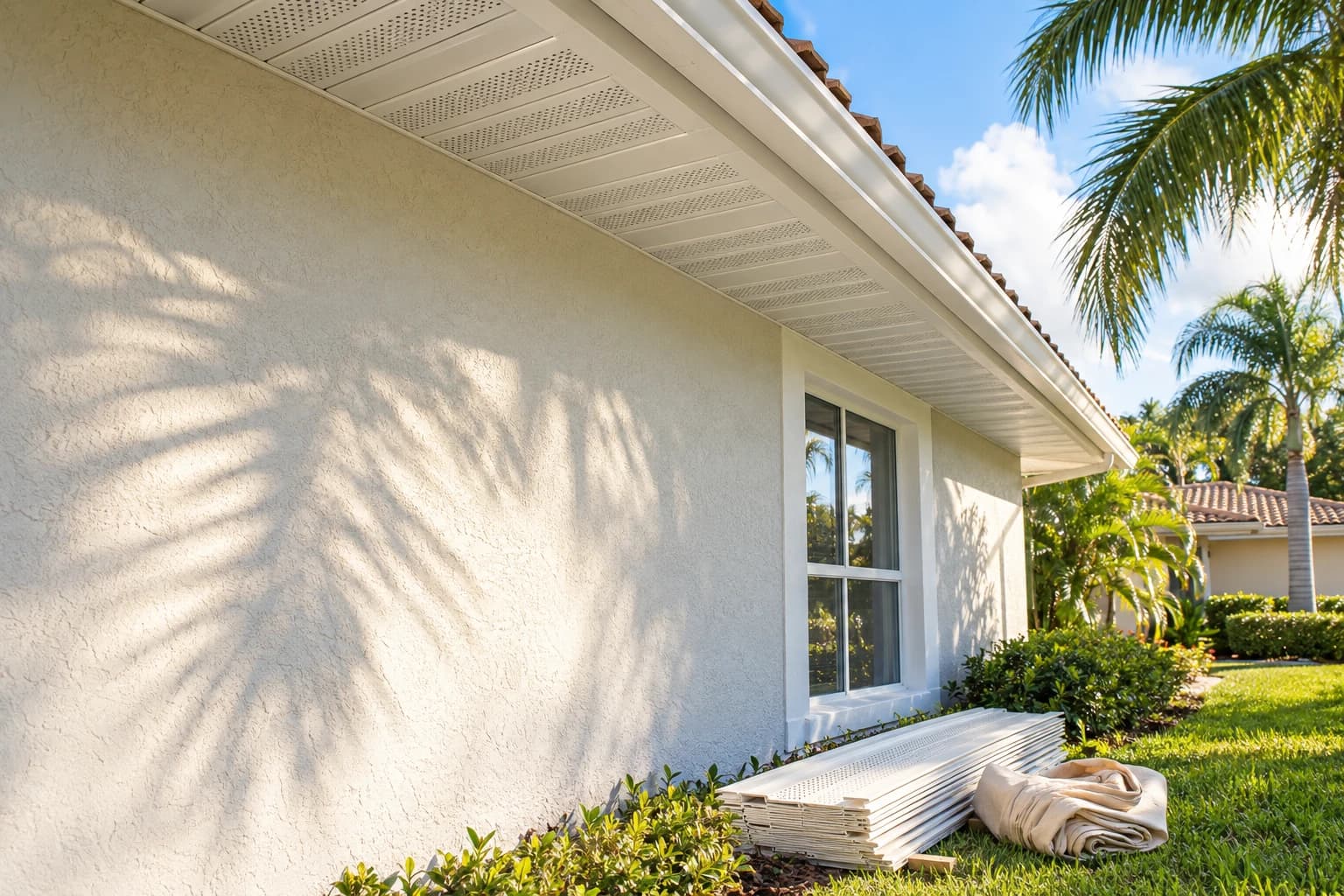
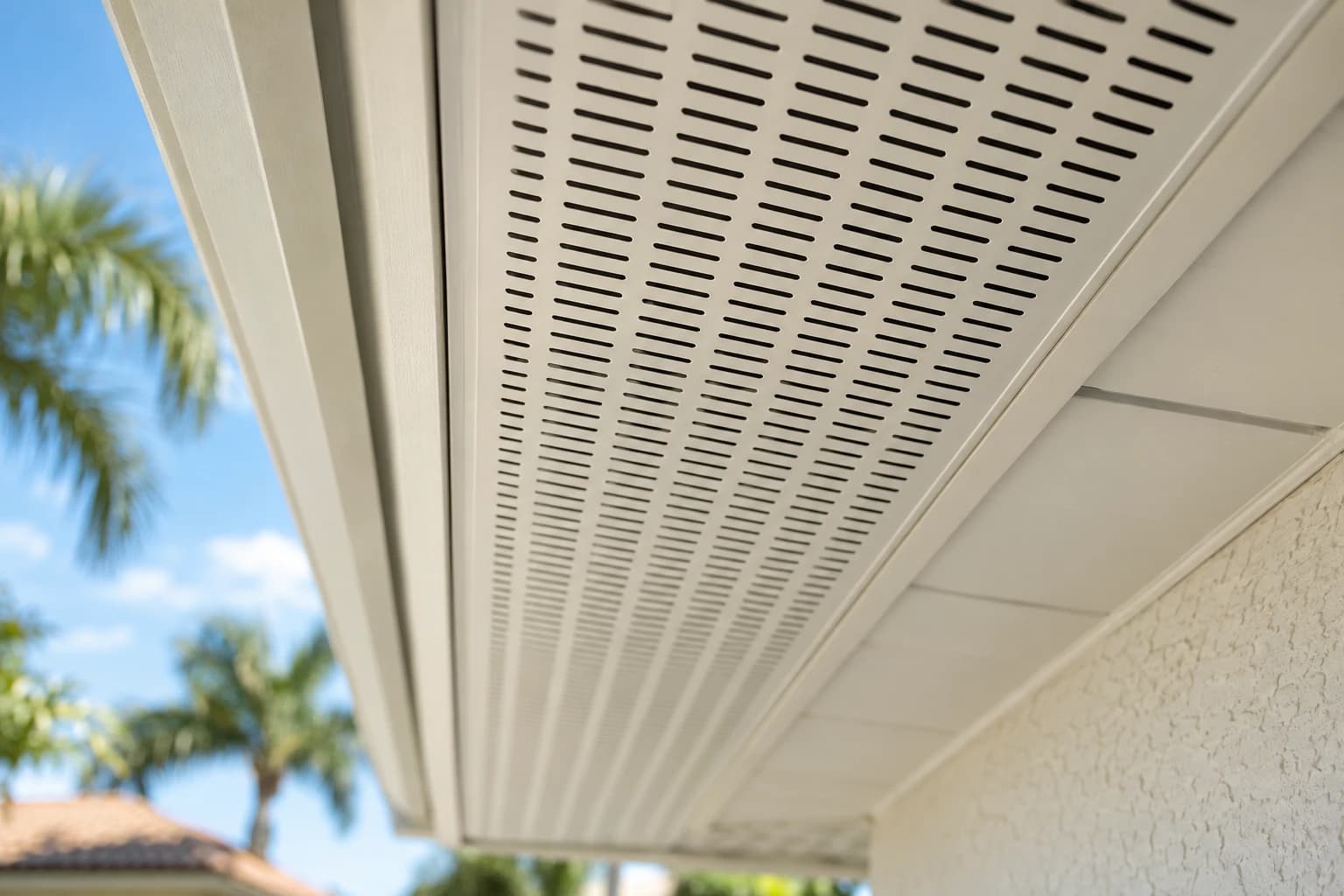
They are the intake vents for attic ventilation: fresh air comes in low at the eaves, so hot air can leave through the roof vents or the ridge vent at the top. The soffit is the panel on the underside of the roof overhang, and the vents are the slotted or perforated sections in it. Air comes in there, rises along the underside of the roof, and exits through the vents up on the roof or at the ridge. That loop is the whole system. Block the bottom and the top does nothing.
In Florida the loop matters more than anywhere. A closed attic space under a summer sun holds excessive attic heat all afternoon and dumps it into the living space below through the ceiling, and the air conditioner pays for it. It holds moisture too, which is what mildews the underside of the roof deck and swells the trim. Ten of 62 estimate requests pulled from our website between September 4 and September 24, 2026 were exterior work at the eaves and walls, and two of them were soffit and fascia to replace, one on a rear patio measured out in feet. Soffit work is a normal call, not a sign of a bad house.
Why Is My Attic So Hot, and Is It the Vents?
Often, yes, and it is one of the cheaper things to fix. A Florida attic will always be hot in July. An attic temperature well above the outside air by dinnertime, or a ceiling below that feels warm to the hand, usually means no attic airflow. The common causes are simple.
- The soffit is solid. Older homes and some cheaper builds have flat panels with no vents at all, or a vent every third bay when every bay should breathe.
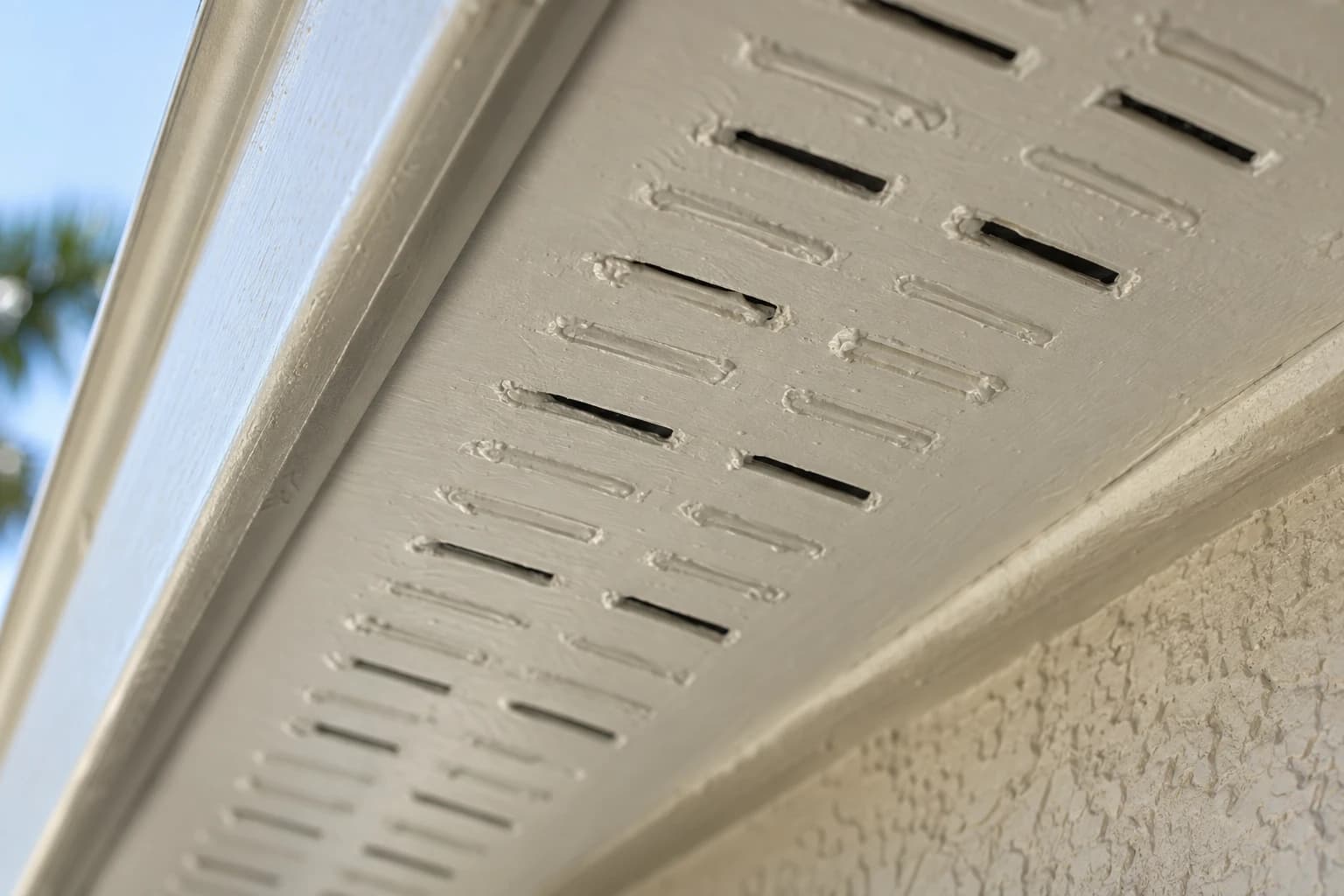
- The vents are painted shut. Every repaint since the house was built rolled another coat over the perforations, and the holes closed up years ago.
- Attic insulation is stuffed against the eaves. Blown-in attic insulation slides down to the edge and sits on top of the vent from the inside. Without a baffle holding it back, the vent might as well not be there.
- There is no exhaust. Intake with nowhere to go is a dead end. Roof-top vents and ridge vents are roofing work, and if the roof has none, a roofer adds them.
- The panels are damaged. Storm-peeled aluminum, rusted screens, or a section an animal pushed open lets air in the wrong way and lets water, wasps, and squirrels in with it.
The fix for the first three is carpentry at the eave: install vents where there are none, replace the painted ones, and pull the insulation back with baffles. It is soffit work our handymen do all season.
How Do I Tell If My Soffit Vents Are Blocked or Failing?
Stand in the driveway and look up, then go in the attic on a cool morning and look toward the eaves. No ladder needed for the first part.
- From outside, the vent slots should show open holes or a screen with light behind it. A smooth, painted surface where the slots used to be is a vent that has been painted shut.
- From inside the attic, you should see daylight at the eaves between the rafters. If you see insulation piled to the roof deck instead, the vents are buried.
- Dark streaks or stains on the soffit panels are water finding its way in, usually from a gutter overflowing above. That is a gutter problem and a soffit problem, and they get fixed together.
- A panel that sags, hangs, or rattles in the wind has lost its fasteners or the wood it was fastened to. The fascia behind it is the usual reason.
- Wasp nests and bird nests in the vents, rust on aluminum panels, or chew marks at a corner mean the screen has failed and the opening is doing the wrong job.
- A musty attic, or mildew on the underside of the roof deck, is moisture with no way out. Attic ventilation is the first thing to check, and blocked soffit vents are the usual answer.
Can I Add Soffit Vents to a Solid Soffit?
Yes, and it is the cheapest way to ventilate a Florida attic. On a wood or plywood soffit, our handymen cut vent openings between the rafter tails and install screened vents in them, either individual vents in each bay or a continuous strip vent that runs the length of the eave. On an aluminum or vinyl soffit, the fix is usually to swap solid panels for vented panels of the same material, so the eave still reads as one system.
Inside the attic, a baffle goes in at each vent to hold the insulation back and keep the air path open to the roof deck. Without the baffle, the next time someone tops up the insulation, the new vent gets buried too. Painted-shut vents get replaced rather than scraped, because the perforations never fully open again and the panel is usually near the end of its life anyway. Building codes size attic ventilation at about one square foot of open vent for every 150 square feet of attic floor, split between intake at the soffit and exhaust at the roof, and the estimate counts the bays against that number so the installation is enough and not just some.
What we do not do is the roof side of the loop. Ridge vents, roof-top static vents, turbines, and powered vents like solar attic fans are roof penetrations and, for the powered ones, electrical work. Active ventilation is a roofer's call; the intake is ours. A roofer and an electrician own those, and we say so at the estimate. The soffit is where the air comes in, and that is the carpentry we handle.
When Should Soffit Panels Be Replaced Instead of Repaired?
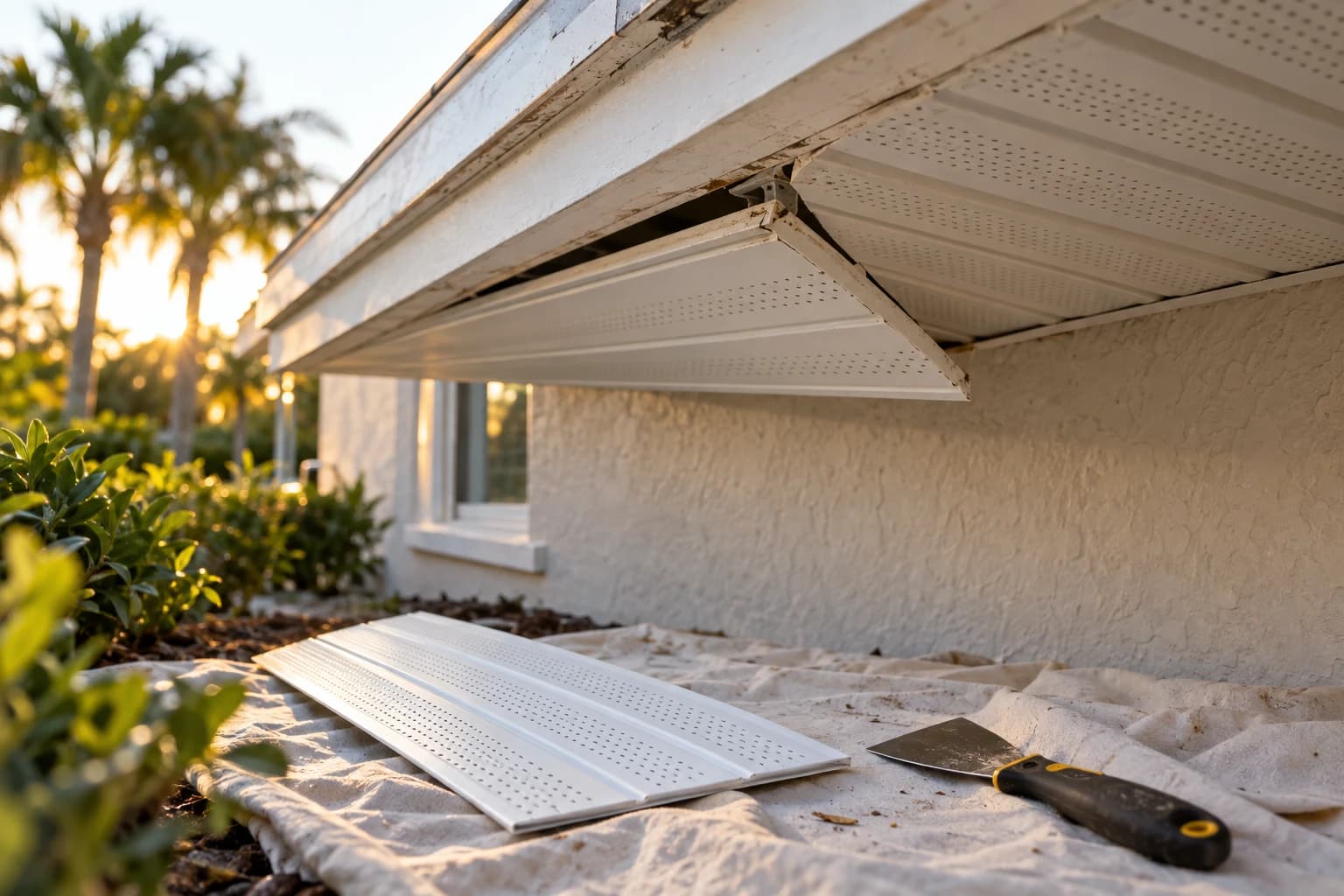
When the panel is rotted, chewed, rusted through, or bent, or when the fascia behind it has gone soft. A loose panel on sound wood can be refastened, and a solid panel can have vents installed without coming down. A sagging panel usually means the fascia holding it has rotted, and refastening into rotten wood buys a month. The fascia gets rebuilt first, and the soffit goes back on wood that can hold it.
Storm damage is its own case. Wind hits the wall and drives up into the overhang, and soffit panels peel from below before anything on the roof moves. A panel bent back into place by hand comes loose in the next band of weather. Peeled sections get replaced, the neighbors get refastened with exterior-grade screws, and the gutter above gets checked, because a gutter torn loose in the same gust is usually where the water came in. After a hurricane that is one line on a longer storm repair list, and the whole list fits one visit.
Animal damage means the animals go first. Squirrels and rats push through a soft soffit panel and treat the attic as a nest. A wildlife company clears them out, and then we rebuild the section and close the eave so the opening is gone, not covered.
Do Soffit Vents Help With Moisture and Mildew?
Yes, because moisture leaves the attic the same way heat does. Warm, damp air rises to the ridge and out, and the intake at the soffit replaces it with fresh air. An attic with no intake holds that humidity against the underside of the roof deck, where it turns to condensation, then mold and dark staining, and the musty smell you notice at the pull-down stairs.
Two things make it worse, and both are worth asking about at the estimate. A bathroom exhaust fan that blows into the attic instead of out through the roof or the wall dumps a shower's worth of steam up there every morning. A dryer vent that has come loose in the attic does the same with lint. Our handymen replace bathroom exhaust fans like for like, and we tell you when a fan is venting into the attic so it can be routed outside.
Attic ventilation is not a substitute for fixing a leak. Stains that grow after every storm are water coming in, not moisture that cannot get out, and the ceiling below will tell you soon enough.
What Moves the Price on Soffit Vent Work?
How many bays, what the soffit is made of, and how high the eave is. Adding screened intake vents to a single-story wood soffit over a lawn is a short visit, and the attic ventilation improves the same afternoon. Replacing the aluminum soffit on a two-story house over a pool cage takes staging and a full day. Vented aluminum and vinyl panels cost more than a screened vent set into wood, and last longer against salt air. Any rotted fascia found behind the panels goes on its own line, and the gutter comes down and goes back up as part of the job.
There are no dollar figures here on purpose. How we price handyman work is the same for the eaves as for the rest of the house: the estimate is free, the price is written before anyone climbs a ladder, and the quote you approve is the bill you get.
How Do I Get Started?
Take a photo of the eave from the driveway and send the form on this page, or call 800-931-1106. A person answers, and a message left after hours gets a call back within one business day. Someone comes out, checks every bay and the fascia behind it, and puts the whole repair in writing before any of it starts.
Our handymen work directly for the company from six Florida offices in Tampa, Orlando, Jacksonville, Clearwater, Sarasota, and Melbourne, and the company holds Florida contractor licenses CRC1336072 and CBC1258366. Every repair carries a one year warranty. If a panel we hung comes loose, we come back and make it right. An attic that breathes is one less thing to think about in July, and we would be glad to take that one off your hands.