
Is Trim Carpentry the Same as Finish Carpentry?
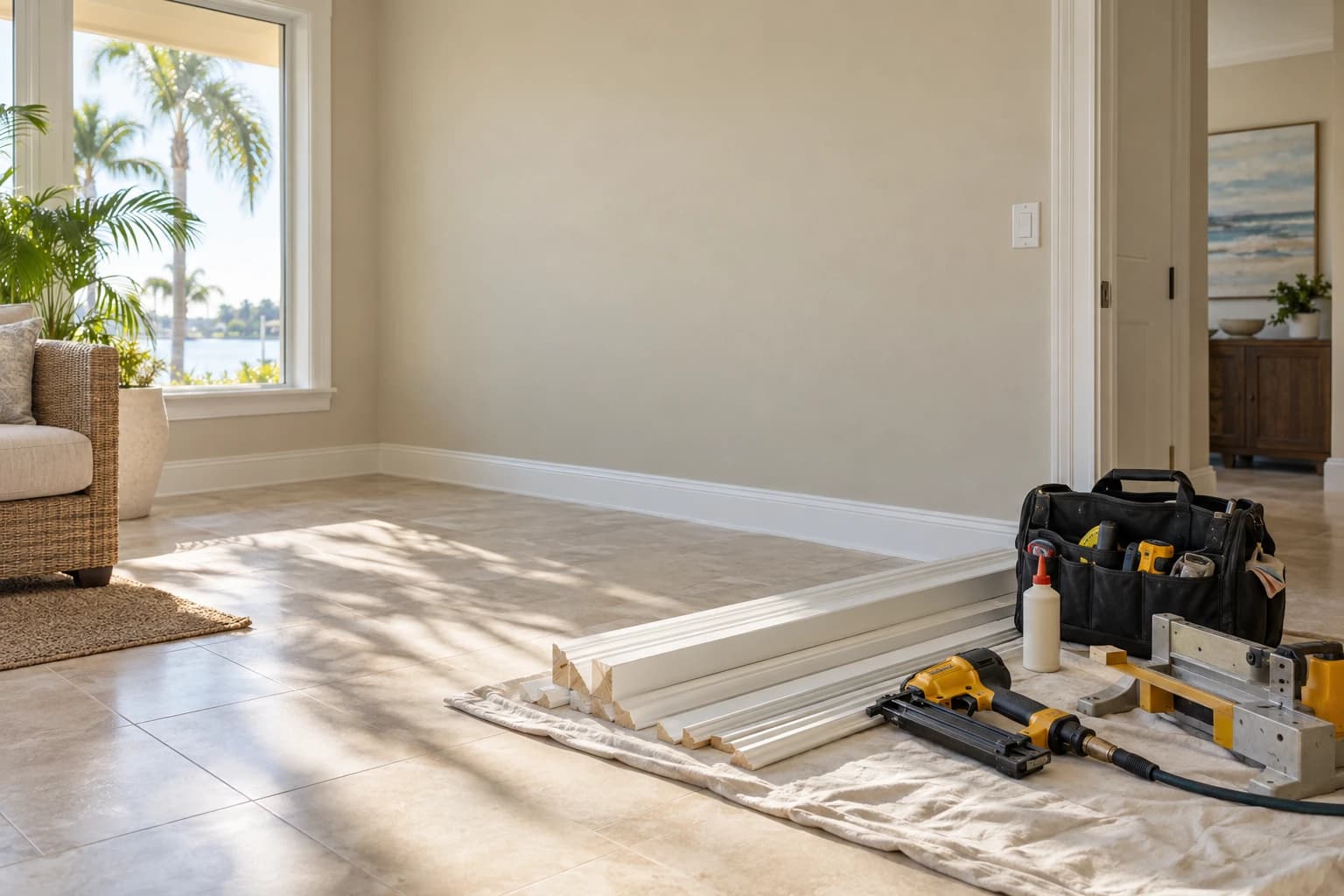
Almost, and you do not have to pick the right word before you call. Finish carpentry is every piece of wood you can see once the walls are closed: baseboard, door and window casing, crown molding, chair rail, wainscoting, built-ins, stair rails, and mantels. Trim carpentry is the biggest slice of that list, the molding that runs along floors, ceilings, doors, and windows. A trim carpenter is a finish carpenter who spends most days on molding.
Homeowners say trim. Carpenters say finish. In 62 estimate requests pulled from our website between September 4 and September 24, 2026, trim showed up as baseboards to install, window molding to repair, trim around an attic opening that got knocked loose, and the trim on a kitchen cabinet. Nobody typed the words finish carpentry, and every one of those jobs was carpentry we were glad to take.
| The job | What it is | Who does it |
|---|---|---|
| Baseboard repair or install | Trim carpentry | Handyman |
| Door and window casing | Trim carpentry | Handyman |
| Crown molding and chair rail | Trim carpentry, the fussy end of it | Handyman with carpentry experience |
| Wainscoting and board and batten | Finish carpentry | Carpenter |
| Built-ins and shelving | Finish carpentry | Carpenter |
| Stair rails, balusters, and treads | Finish carpentry | Carpenter |
| Exterior trim, fascia, and corner boards | Exterior carpentry, usually with rot | Handyman or carpenter |
Trim, finish, or something else: the jobs people call about
What Counts as Trim Carpentry?
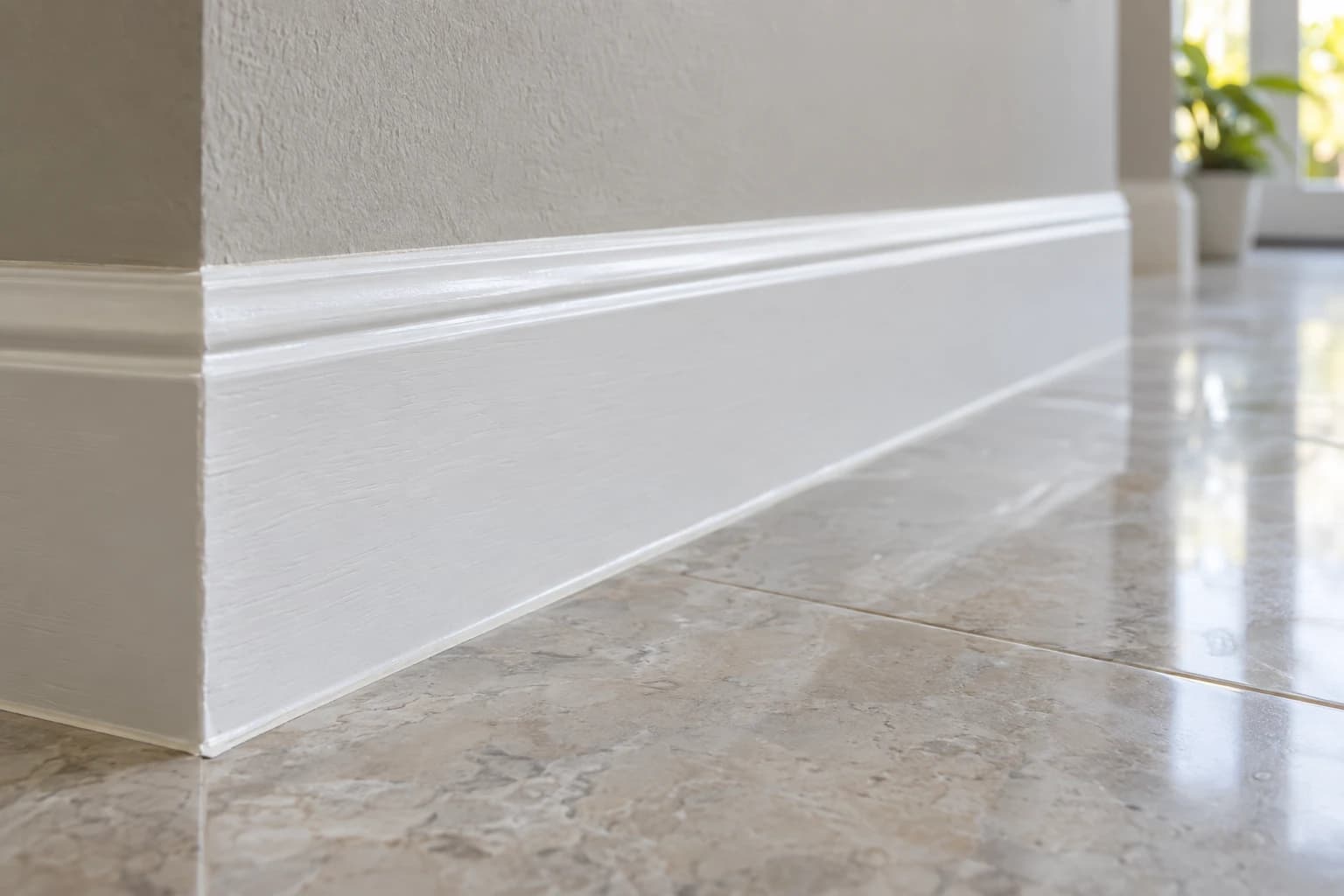
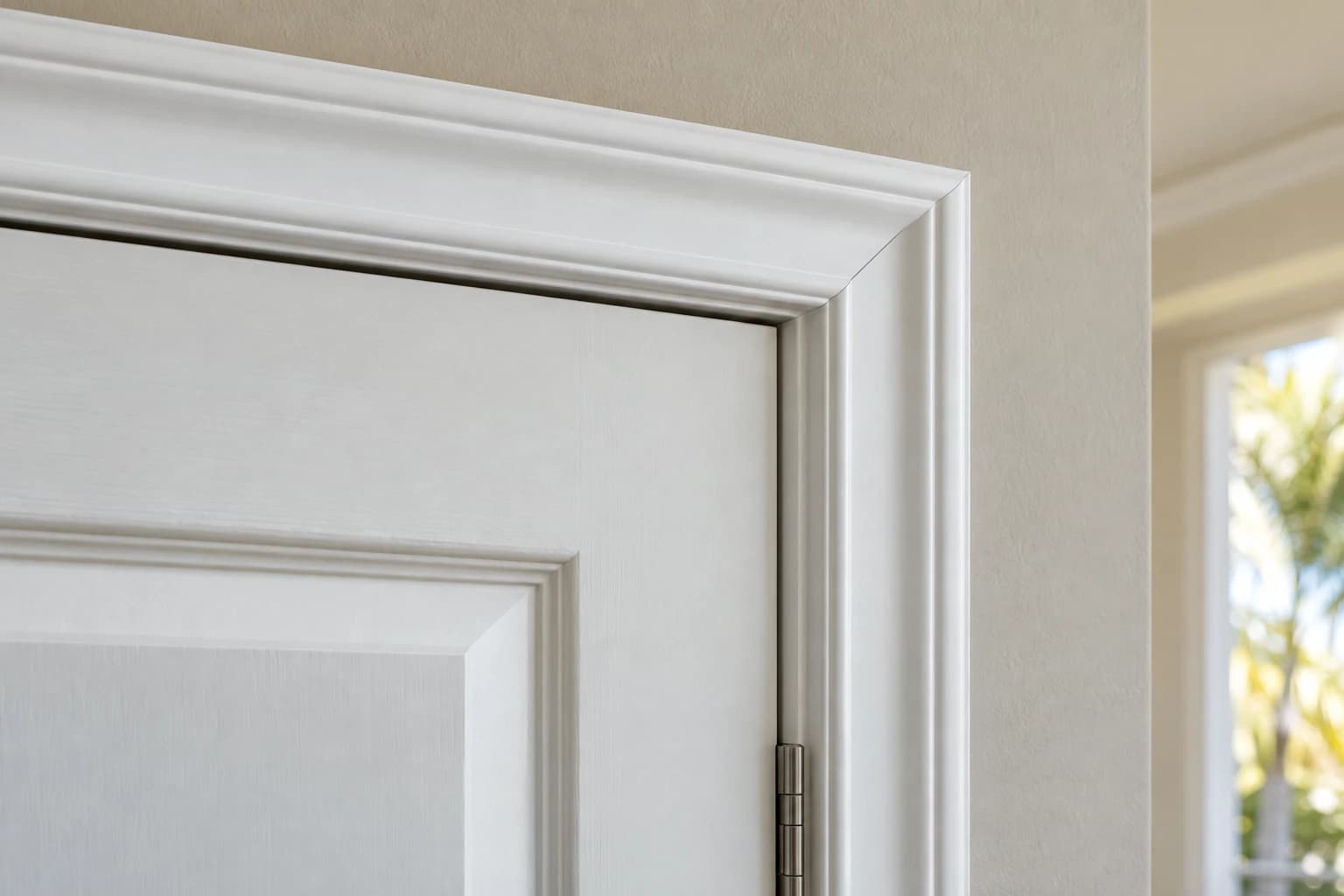
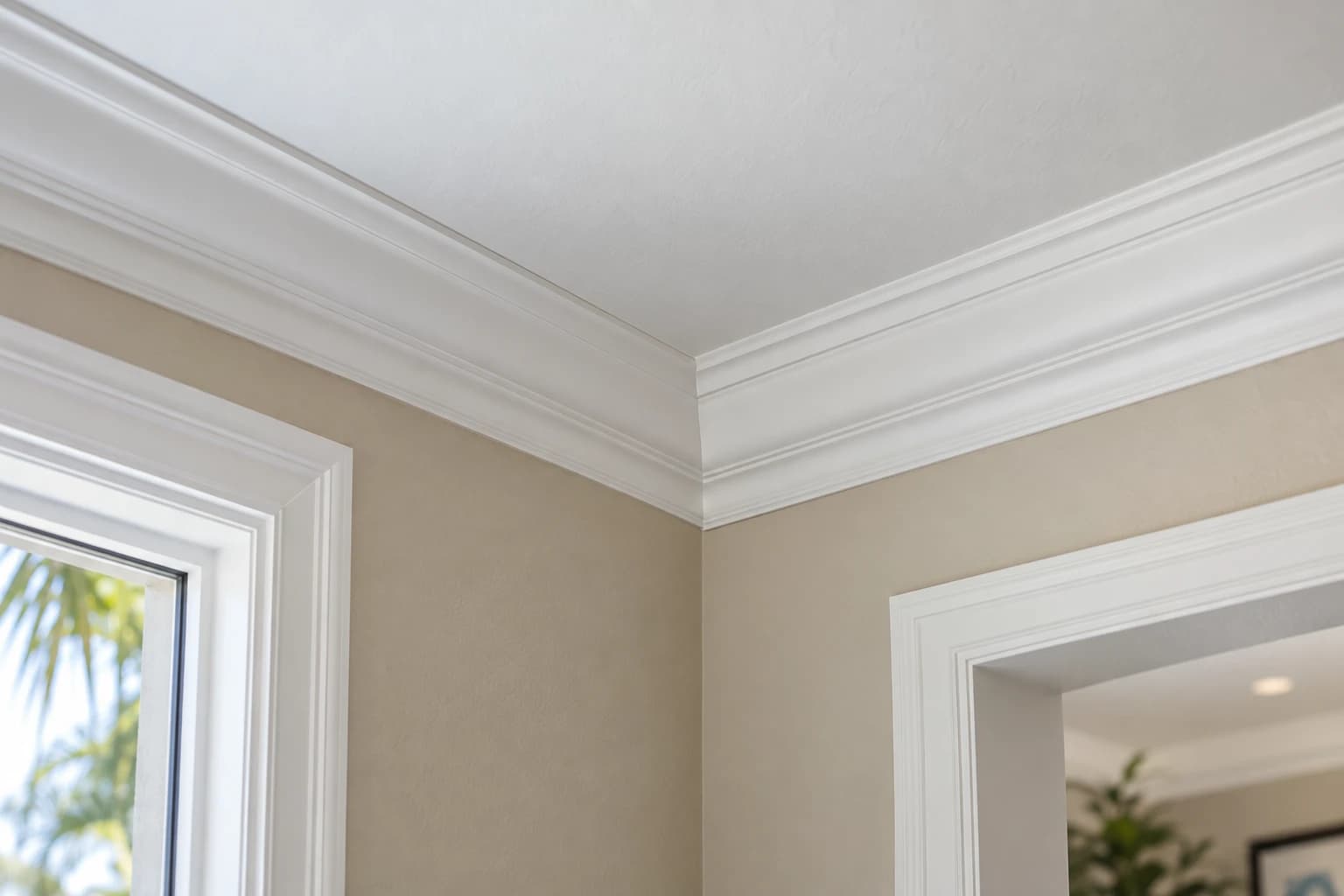
Anything that covers a joint between two surfaces and makes it look finished. Baseboard covers the gap between drywall and floor. Casing covers the gap between a door jamb and the wall. Crown covers the corner where wall meets ceiling. Shoe molding and quarter round cover the gap the flooring left at the base. Window stools and aprons finish the sill.
Most trim work is repair, not new construction. New floors went in and the old baseboard no longer reaches. A door was replaced and the casing split coming off. A leak swelled the baseboard in a bathroom. A dog or a mover took a chunk out of a corner. Each of those is a short visit, and several of them fit in one.
Florida adds a twist. A lot of our houses are concrete block with drywall on furring strips, and the floors are tile. Baseboard here sits on tile, not carpet, so the bottom edge shows and has to be caulked clean. Humidity swells cheap MDF trim at the joints, and the salt air on the coast rusts the nails that hold it. Our carpenters plan for all of that, because they live in the same houses.
What Does a Finish Carpenter Do That a Trim Carpenter Does Not?
The pieces that have to be built, not just cut and nailed. A built-in bookcase, a window seat, a mantel, a coffered ceiling, a run of wainscoting with a cap and panels, or a new stair rail is carpentry that starts as a sketch and a pile of lumber. Finish carpentry also covers the patient matching work in older homes. The bungalows in Seminole Heights, the Riverside and Avondale houses in Jacksonville, and Winter Park's older streets all have molding profiles the big box store stopped carrying, and matching them means finding the right profile or building it up from two pieces.
The skill underneath both jobs is the same: scribing wood to a wall that is not straight, cutting a corner that is not square, and hiding the seam. A house in Florida has plenty of walls that are not straight. The difference between a trim job that looks right and one that shows every gap is that skill, more than the material.
Rough Carpentry vs Finish Carpentry: The Key Differences
Rough carpentry is the wood you never see. Framing walls, floor joists, roof trusses, and the headers over doors and windows are rough carpentry, the early stage of a build, and it has to be square, plumb, and strong before anyone thinks about how it looks. Finish carpentry is the last stage, the final touches after the drywall and paint: interior trim, door casings, installing cabinets, and building the custom cabinets and built-ins a room is designed around. Rough carpenters work in framing lumber with big tools and a framing nailer. Finish carpenters work in molding and hardwood with a miter saw, a coping saw, a combination square, and a block plane, and they are judged on the details.
In a Florida house the rough carpentry is often concrete block instead of wood studs, so the framing a homeowner runs into is inside: the wall between two rooms, the header over a widened doorway, the platform under a tub. Anything that touches the structural integrity of the house is contractor work with a permit. Rough and finish carpentry from one company means the wall gets moved in the morning and trimmed out in the afternoon, under one written price.
Can a Handyman Do Trim Work?
Yes, and it is some of the most common work our handymen do. Baseboard, casing, shoe molding, a crown run in one room, a rotted window stool, and the trim a door replacement left behind are all handyman carpentry. Our handymen work directly for us, and the ones who carry the carpentry work have the right tools on the truck: the miter saw, the coping saw, the nail guns, and the patience for decorative trim.
Where a handyman stops is the same place Florida law stops him. Cutting into a wall to add a header, changing a stair, or anything a building permit covers is contractor work. The Handyman Company holds Florida contractor licenses CRC1336072 and CBC1258366, so when a trim job turns out to be a framing job, the same company can quote it. The Florida license rules show where that line sits.
Trim also rides along with everything else. Thirteen of the 62 requests were flooring and baseboards together, and the rest of a typical list had doors, drywall, and paint on it. One handyman, one visit, one written price.
How Do I Describe the Job When I Call?
In plain words, with a photo. You do not need the name of the molding. Tell us which room, what is wrong, and what you want it to look like when it is done. A picture of the existing trim, with a tape measure in the frame if you have one, answers most of the questions a carpenter would ask.
- Repair or replace. A split corner is a repair. New baseboard in every room after a flooring job is a replacement, and the price is by the length of wall.
- Paint grade or stain grade. Painted trim can be MDF, finger-jointed pine, or PVC, and the joints get caulked and painted over. Stained trim has to be solid wood, and every joint shows, so it is more careful work.
- Match or fresh. Matching the trim in the rest of the house keeps the rooms consistent. A fresh profile is fine in a room that stands on its own, like a remodeled bath.
- Floors first or trim first. Hard flooring goes in before baseboard, so the base sits on top of it. Carpet goes in after, with the base held up off the subfloor. If new floors are coming, say so, and we will schedule the trim for after.
- Painting. Tell us whether you want the new trim primed and painted, or primed and left for your painter. Our painters do the first option in the same visit.
- Cabinets. Installing cabinets, hanging a cabinet door that will not close, or building a custom cabinet to fit a gap is finish carpentry too. Put it on the same list.
What Does Trim Work Cost?
It depends on the length, the profile, and the corners, and you get the number in writing before anyone cuts a board. How we price handyman work is the same for trim as for everything else: the estimate is free, and the quote you approve is the bill you get. What moves the price is honest and easy to see. A long straight wall is cheap per foot. A small room with eight corners, a bay window, and a closet is not. Crown costs more than baseboard because every cut is compound. Stain grade costs more than paint grade because there is no caulk to hide behind. Rot or water damage behind the old trim adds the wood rot repair that has to happen first.
The cheapest way to buy trim work is to bundle it. The baseboard in the hall, the casing on the new door, and the quarter round in the kitchen share one trip, one setup, and one cleanup.
Should I Call a Painter, a Handyman, or a Carpenter?
Start with the handyman, and let the job sort itself out. A painter will caulk and paint the trim you have, and a good one will tell you when a piece is too far gone to paint. A handyman replaces the piece. A carpenter builds the piece that does not exist yet. At The Handyman Company those are the same phone call, because the handymen carry all three trades and the person who looks at the job says which one it needs.
The common mistake is calling a painter for a trim problem. Peeling paint on a window stool or a baseboard that has gone soft at the bottom is not a paint problem. It is water, and the wood has to be cut out and replaced before any paint will hold. Outside, the same rule applies to fascia, corner boards, and door frames, which is why rot repair comes before painting every time.
How Do I Get Started?
Send the form on this page or call 800-931-1106, and tell us what the trim looks like now and what you want. A person answers, and if you leave a message we call back within one business day. Someone looks at the job, measures, and puts the price in writing before any work starts. If a piece of trim turns out to be hiding rot, you hear about it at the estimate, not after.
Our carpenters work directly for us, and every job carries a one year warranty. If a joint opens up or a corner was not right, we come back and make it right. Six Florida offices, in Tampa, Orlando, Jacksonville, Clearwater, Sarasota, and Melbourne, do this work every week, and we would be glad to look at yours.