
Is Drywall Repair in Melbourne, FL a Big Part of Your Work?
More than at any of our other five offices. Of the six, Melbourne books the most drywall as a share of its work. Carpentry and trim come first on the Space Coast, then whole to-do lists, then drywall, then doors. So a hole in the hallway sheetrock or a stain on the bedroom ceiling is familiar ground for the handyman who comes.
Florida homeowners ask about it everywhere, too. Drywall, ceilings, and water damage came second only to doors and windows in 80 estimate requests pulled from our website between October 8 and November 5, 2026.
The patch, the paint, and the loose towel bar all go on one written price. Our Melbourne handyman team works from 1600 Sarno Road and covers Palm Bay, West Melbourne, Rockledge, Viera, and the beachside towns. Our drywall repair handymen cut, tape, texture, and paint in one visit, so there is no second company to call.
A Storm Left a Stain on My Ceiling. Who Do I Call First?
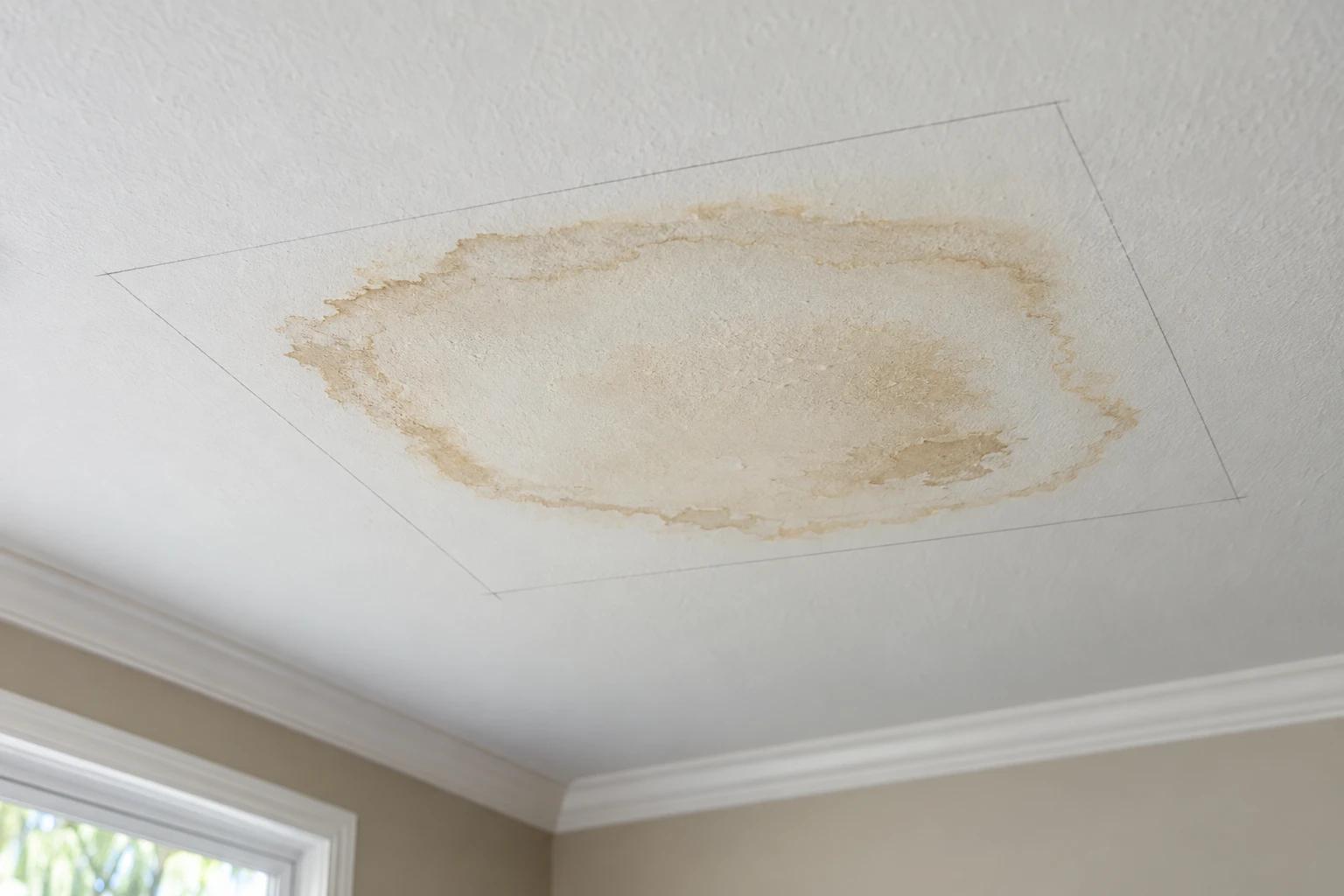
Call whoever stops the water, then call us for the ceiling. On the Space Coast the stain usually shows up after a summer storm. Wind pushes rain past a window, or a roof leak drips onto the board. An AC drain line that backs up leaves the same ring.
We do not fix leaks or roofs. A roofer or the AC company handles the source. Once it is dry and stopped, the damaged ceiling is ours, and it is less frightening than it looks. If the ceiling is sagging or dripping right now, start with what to do first with a wet ceiling.
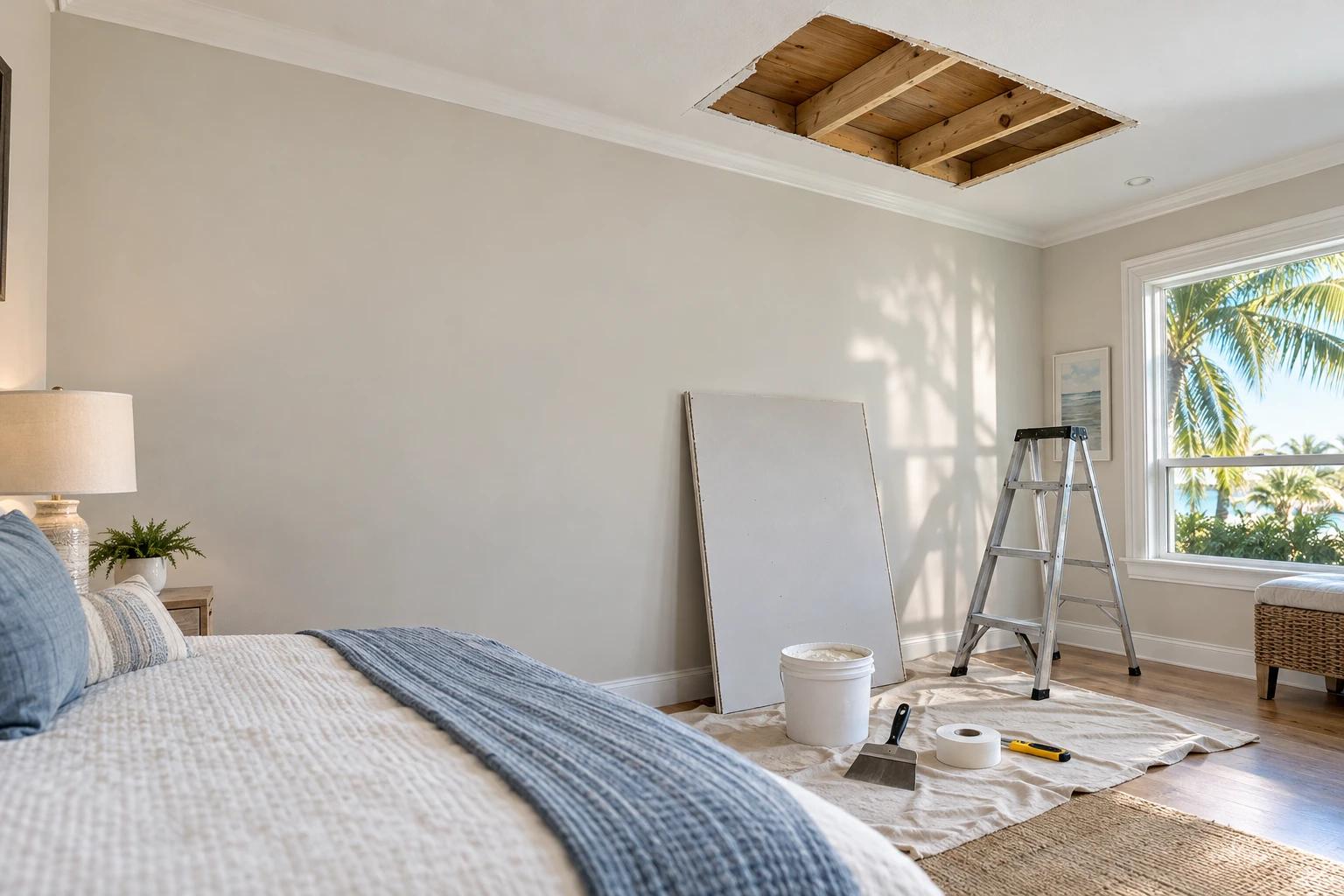
The handyman cuts the stained board back to dry, solid drywall. They check the insulation and framing behind it for water. Then they hang new board, tape the seams, and mud them. The result is a ceiling that looks like nothing happened. The texture is matched, and the ceiling is primed and painted so the stain cannot bleed through. A bedroom ceiling that took on a lot of water may need a full sheet or two, and that is still ordinary water damage repair for us. When a storm damaged more than the ceiling, the trim, screens, and doors go on the same list under storm damage repair.
Can You Patch the Drywall in My Garage, Too?
Yes, and garage walls are some of the easiest drywall repair jobs we see. A car door swings too wide. A bike, a ladder, or the kids' scooter punches through the sheetrock. Shelving pulls out of the wall because it was hung on plastic anchors.
The patch works the same as it does indoors. Some garages have a thicker, fire-rated board on the wall shared with the house, and a patch there gets the same kind of board.
If the shelving is what made the holes, it is worth hanging it right this time. The handyman can patch the old holes and then set new garage shelving and storage into the studs, so it holds what you put on it.
Will the Patch Match the Texture on My Walls?
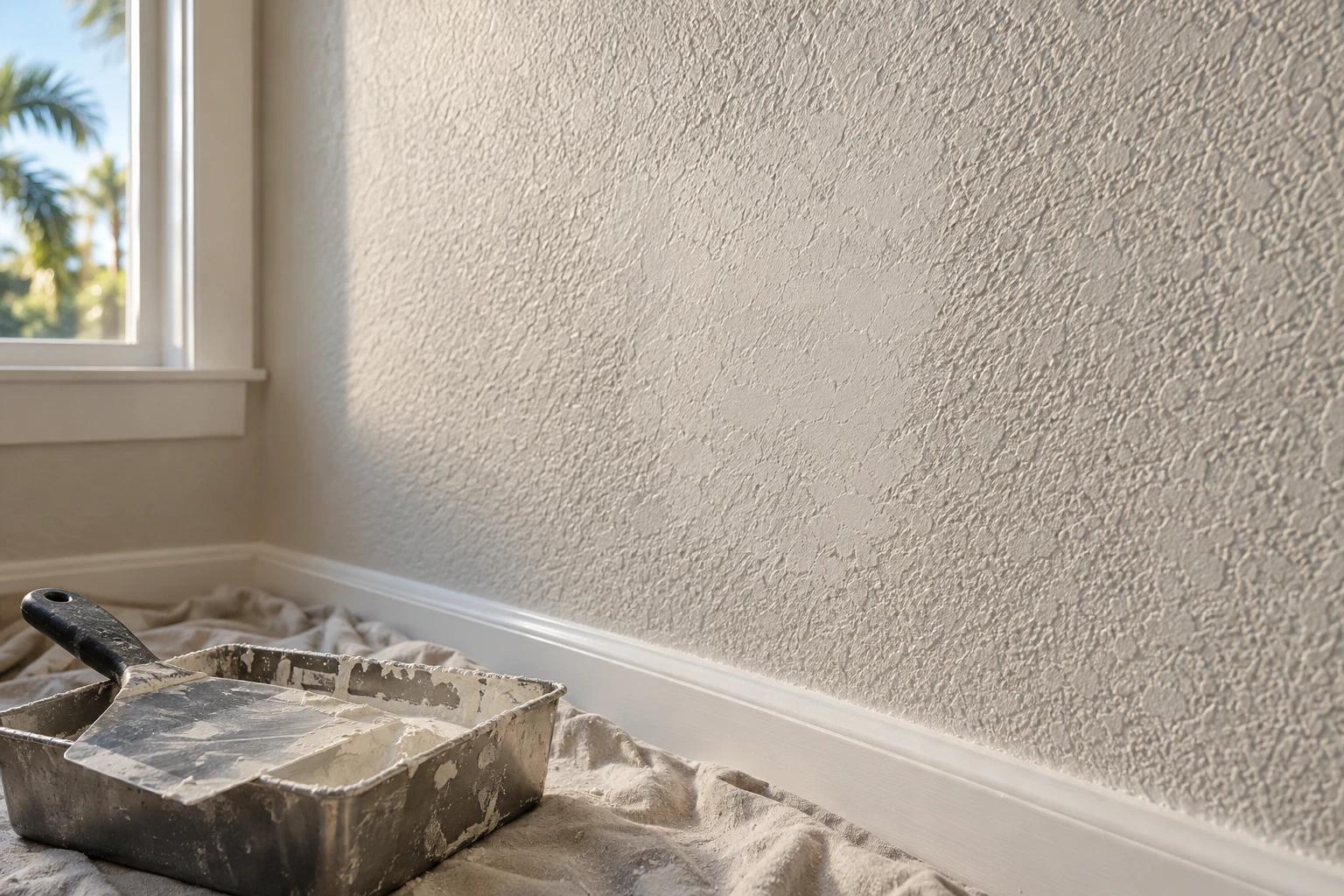
It should, and it is the part our handymen take the most care with. Brevard homes span a lot of decades. Palm Bay grew out of Port Malabar, laid out in 1959, and much of it is one-story concrete block. Rockledge neighborhoods like Levitt Park and Woodsmere were built from the 1960s through the 1980s. West Melbourne is full of newer stucco homes in subdivisions like Heritage Lakes. The walls inside are mostly knockdown or orange peel, and the handyman matches whichever one you have.
Here is what Brevard homeowners usually find, and what the fix looks like.
| What you see | What it usually is | What the handyman does |
|---|---|---|
| A brown ring on the ceiling after a storm | Water from a roof leak or rain past a window, now stopped | Cuts back to dry board, replaces it, matches the texture, primes, and paints |
| Holes where a TV, curtain rod, or shelf came down | Anchors that pulled out of sheetrock over block or between studs | Fills or patches each hole and hangs the item again on the right fastener |
| A crack running up from a door or window corner | Normal settling where the board is weakest | Opens the crack, tapes it, coats it, and blends the texture |
| A small bump or a round crack in a smooth wall | A nail or screw that backed out | Sets a new screw beside it and fills both so the pop does not return |
Common drywall damage in Brevard homes
If the ceiling is the old popcorn kind, the patch can match it, or you can have the whole ceiling scraped smooth with popcorn ceiling removal. We would be glad to talk through both.
How Do You Fix a Big Hole So It Never Cracks Again?
With something solid behind the patch. Spackle is fine for nail holes, small dents, and dings. A hole the size of a fist needs a new piece of sheetrock with backing behind it, or the patch will crack around the edges.
Here is how the handyman closes a big hole in drywall, step by step.
- 1
Cut the hole square
A utility knife or a small drywall saw cuts the damaged sheetrock back to a clean square. A square is much easier to fit than a ragged hole. The handyman looks inside for wires and pipes before cutting.
- 2
Put backing behind it
Wood strips go inside the wall, held in place with screws. Or drywall repair clips slide onto the edges of the old board. If the hole sits next to a stud, the new piece can be screwed straight to the stud.
- 3
Fasten the new piece
A new piece of drywall is cut to fit the opening. A screw gun sets each of the screws just below the surface without tearing the paper face.
- 4
Tape and mud the seams
Paper or mesh drywall tape goes over the seams. The first coat of joint compound, which most people call mud, is spread with a drywall knife. Steady pressure from the center out presses it flat so the tape sits tight to the wall.
- 5
Feather, sand, and finish
Applying each coat thinner and wider hides the edges, with a sanding sponge between coats. Drying time depends on the mud and the humid Florida air, so the handyman follows the label. Once the last coat is sanded, the wall is ready for texture, primer, and paint.
Spackle or Joint Compound: Which One Does My Wall Need?
The difference between the two comes down to the size of the damage. Spackle is for small things: a nail hole, a dent from a door handle, a ding from moving day. It goes on with a putty knife, and one pass often does it.
Joint compound is for anything that needs tape or a new piece of sheetrock. It spreads in thin, smooth coats across a wide area, and it sands easily. That is why mud is used on seams and big patches, and why it is more than a nail hole needs.
Tape matters too. Paper tape is strong on corners and long seams, and it is pressed into a first coat of mud. Mesh tape sticks to the wall on its own, and mud goes over it.
The tools for a good drywall patch are simple, and our handymen bring all of them:
- A utility knife and a small drywall saw to cut out the damage
- A screw gun or drill and drywall screws
- Drywall knives in a few widths, and a mud pan
- Paper or mesh tape, and joint compound
- A sanding sponge, primer, and paint to match the room
Which Drywall Repairs Are Easy Enough to Do Yourself?
Nail holes and small dents are easy, and they are a fine place to start. Plenty of homeowners do those themselves and save a little money. A little spackle, a putty knife, and a light sanding usually do it. A doorknob hole is not a big deal either, though it needs a patch and a few coats of mud.
The hard part is not the hole. It is getting the patch flat and the texture to match, so it does not show under paint. A first try often leaves a ridge or a halo you can see when the light hits the wall. It does not have to look perfect after the first coat, but it is hard to hide a ridge once it is painted. If you would rather not worry about that, it is no trouble at all to hand it to us.
Ceilings are more difficult. Working overhead with a knife full of mud is messy, and a stained ceiling may hide wet board or insulation above it. We recommend a call for any ceiling patch, any texture match, any hole bigger than your hand, and any crack that keeps coming back. If you decide to try the small ones, our step-by-step drywall patch guide lists the tools and the order.
What Do Space Coast Customers Say After the Repair?
They mention the handyman by name, and they mention that the patch is hard to find. Drywall is among the jobs mentioned most in our Google reviews.
- "DId a great job to repair and replace my drywall. We can't even see where the repairs are. Great Job Handyman, Great Job Larry!" (Clemens Nijhof, Google review of the Melbourne office, January 30, 2021)
- "Larry, first came to do our initial project, fixing some holes in the drywall in the our new house’s garage so that our cats would be safe to explore that space. Larry is a true craftsman, professional, efficient, and considerate, going above and beyond by closing a couple additional smaller holes that needed to be done too." (Sheila Sieusankar, Google review of the Melbourne office, August 27, 2021)
- "Joel replaced aging soffits all around the house (roof was replaced a few months ago), replaced damaged plywood in the carport, and totally removed/replaced badly water damaged bedroom ceiling. He kept everything cleaned up as much as possible as the work progressed." (Lifesigns Deaf, Google review of the Melbourne office, December 17, 2021)
Our Melbourne handymen work directly for us under our licenses and insurance, not strangers from a lead site. Every drywall repair carries a one year warranty. If a seam ever shows through the paint, we come back and make it right. You can read more from Brevard neighbors on our reviews.
What Will It Cost, and How Soon Can Someone Come?
Drywall repair in Melbourne, FL is priced by the job in front of us, and you see that price in writing before any work starts. Drywall repair cost moves with how many spots there are, how big they are, and whether they are on a wall or a ceiling. Matching a texture, painting a whole wall instead of a patch, and replacing a full sheet all add to it.
How handyman pricing works in Florida is the same for drywall as for everything else. The estimate is free, the price is written, and the quote you approve is the bill you get. If the wall is opened and there is wet framing nobody could see, that gets its own written price, and you approve it first.
Spring is the busiest season at the Melbourne office, so a call in the fall or early winter often gets the earliest date. Call (321) 800-5005 or send the estimate form with a photo of the damage. A person answers, and if you leave a message we call back within one business day.