Which Way Should a Ceiling Fan Turn?
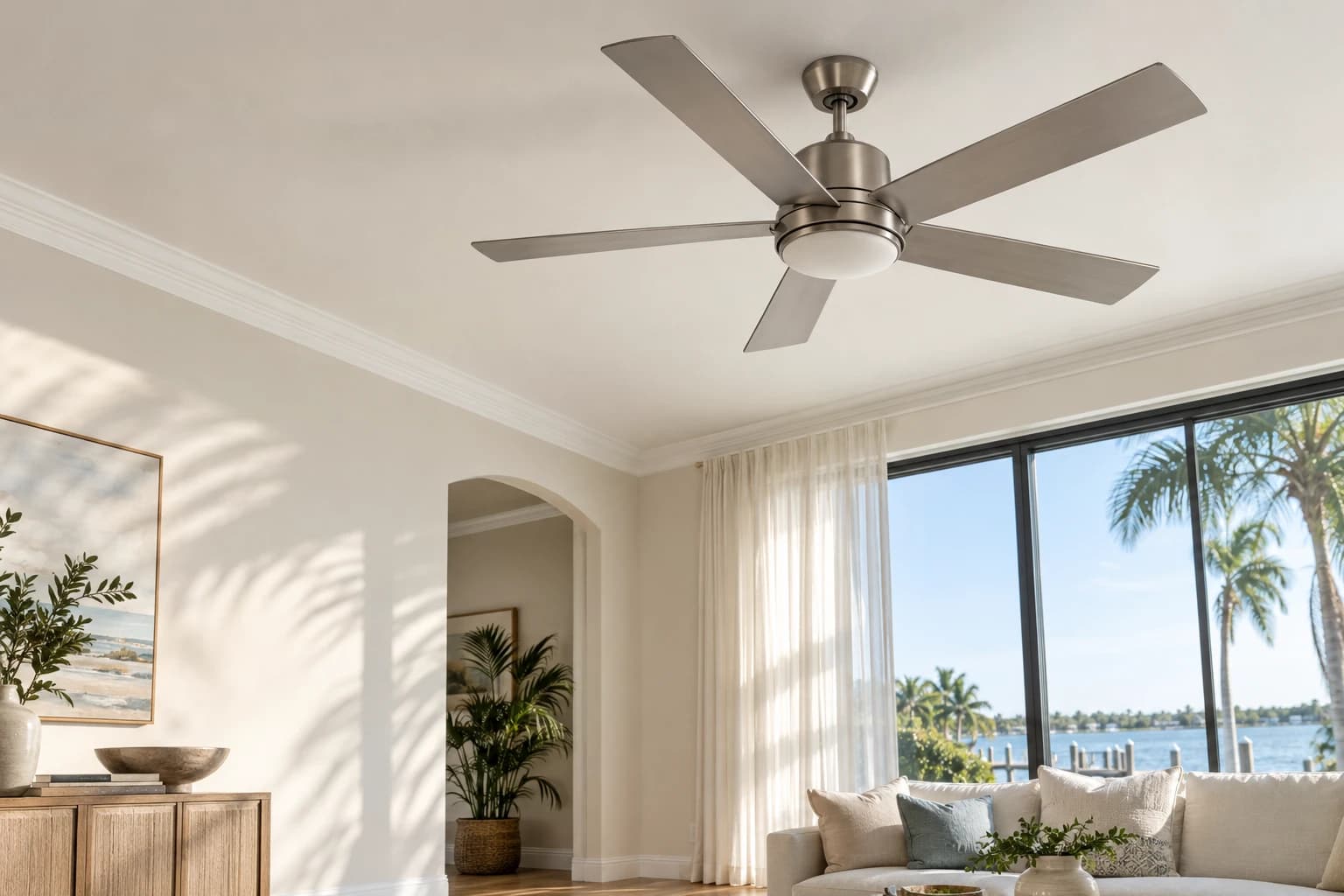
It depends on the season, and the test is easy. Stand under the fan and look straight up. In summer the ceiling fan blades should turn counterclockwise, and you should feel cool air on your face. In winter they should turn clockwise on the lowest speed, and you should feel almost nothing.
The blades are tilted, so ceiling fan direction decides where the air goes. One way pushes air down onto you. The other way pulls air up toward the ceiling and spills it down the walls.
| Season | Direction from below | Speed and feel |
|---|---|---|
| Summer | Counterclockwise | Medium or high, a steady breeze on your skin |
| Winter | Clockwise | Lowest speed, no draft you can feel |
| Lanai or porch | Counterclockwise all year | Whatever feels good, it never switches |
Ceiling fan direction by season, looking up from below
Which Way Should a Ceiling Fan Rotate in the Summer?
Counterclockwise, so the fan pushes a column of air straight down. You feel that downdraft as a breeze. Moving air pulls heat off your skin, the same way a breeze off the water feels cooler than still air at the same temperature.
That wind chill effect is why a fan on medium or high speed lets you set the thermostat a few degrees higher and still feel cooler. The air conditioner runs less, which helps with cooling costs, and the room feels the same to you. The catch is that the fan cools people, not rooms. Turn it off when you leave, because a fan spinning over an empty bed is only warming its own motor.
What Way Should the Ceiling Fan Turn in Winter?
Clockwise, and slow. Winter mode is there to help the heating, not to make a breeze. Warm air rises, so on a cool night the warmest air in the room is sitting up against the ceiling. A fan turning clockwise on low pulls the cooler air up from the floor. That pushes the warm air out along the ceiling and gently down the walls, where it adds comfort on a cool night.
If you can feel air moving on your face, the fan is too fast or not set to the correct direction. Keep it on low speed. Ceiling fan direction matters most under high and vaulted ceilings, because more warm air collects up there.
Does Ceiling Fan Direction Really Matter in Florida?
In summer it matters every day, and winter mode is only for a few weeks. Most Florida fans run counterclockwise nearly year round. When a cold front comes through and the heat runs for a week or two, flip the bedroom and living room fans to clockwise on low. When the air conditioner comes back on, flip them back.
Lanai and porch fans never switch at all. Outside, the only job is a breeze and good air circulation, and warm air drifts away instead of collecting under a ceiling. What matters more out there is a damp-rated fan built to handle moisture.
If your house has attic heat pressing down through the ceiling in August, the fan will not fix that. Good airflow up top is a separate question, and soffit vents and attic heat is where to start.
Which Way Should the Switch Be on a Ceiling Fan?
There is no single right position, because makers wire the switch differently. A label, when there is one, may read clockwise and counter clockwise, or summer and winter. Flip it and stand directly underneath. If you feel a breeze, it is set for summer. If you feel nothing while the blades turn, it is set for winter. Here is how to find the switch on most fans.
- 1
Turn the fan off and let it stop completely
Never slide the reverse switch while the ceiling fan is spinning. It strains the motor and can jolt the fan on its mount. Wait until the blades sit still.
- 2
Look on the motor housing below the blades
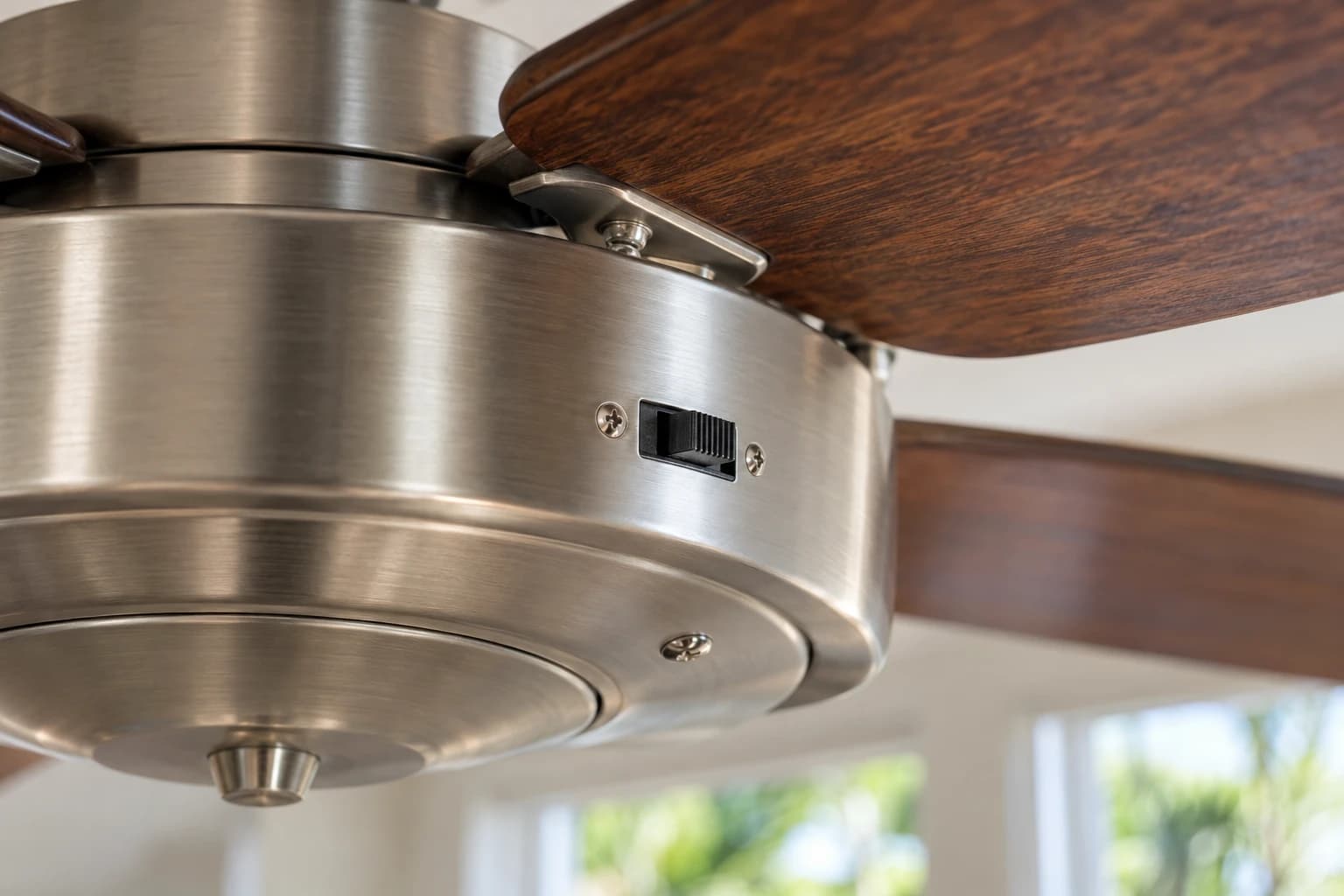
Most fans have a small slide switch on the side of the round housing, just under the blades. Some hide it on the bottom, near the light kit. Slide it to the other side.
- 3
Check the remote or the wall control
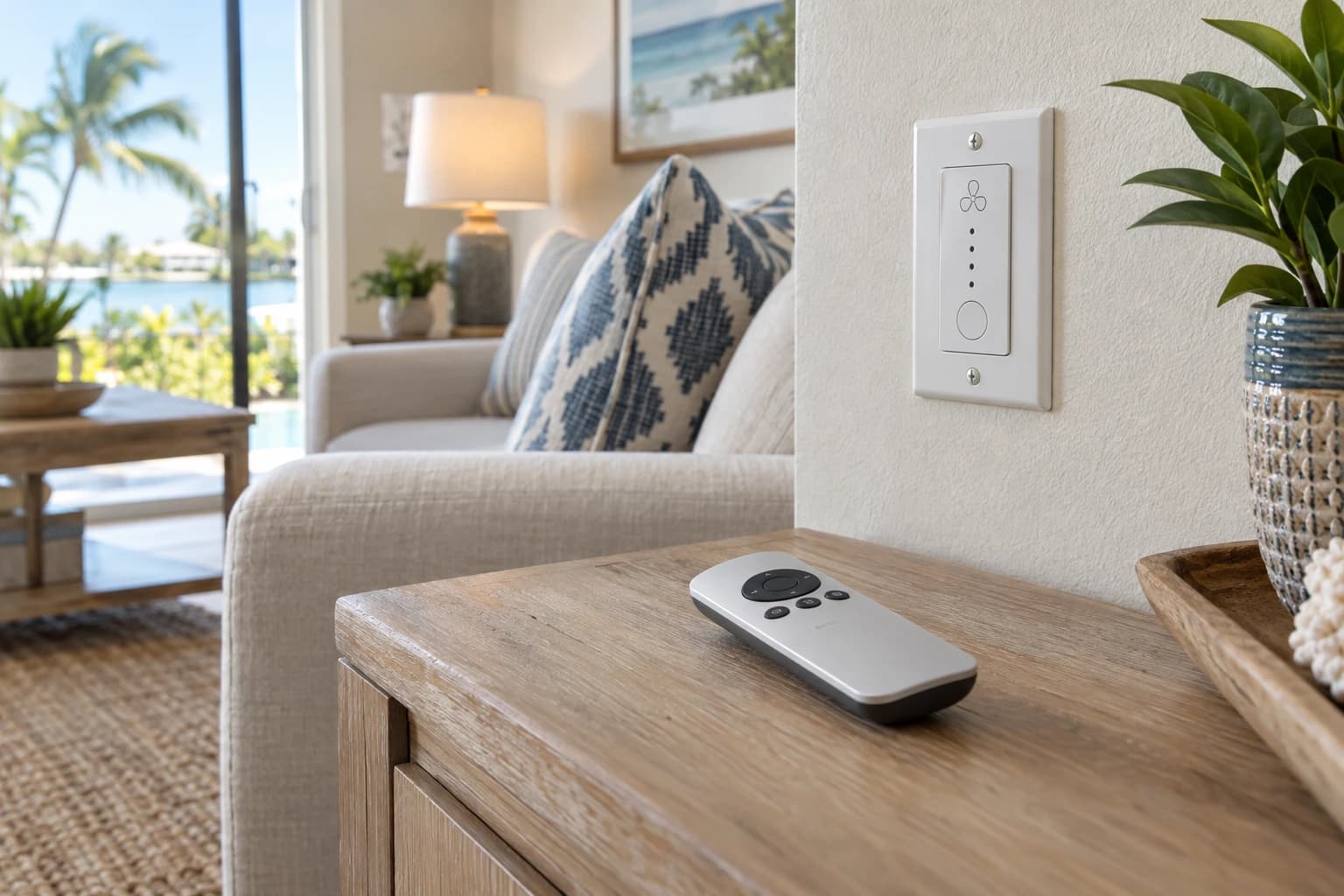
Many newer fans have no switch on the housing at all. A button on the remote control or the wall control changes direction instead. A smart fan on Wi-Fi can usually reverse from its phone app too.
- 4
Look for a second pull chain
A few models use a chain for direction, separate from the speed chain and the light chain. Pull it once with the fan stopped.
Fans with a DC motor, and many older fans, often have no switch on the housing. They reverse from the remote only.
Some remote fans also do not remember their direction after a power cut or a storm. If the fan turns the wrong way after the power comes back, it is not broken. Press the reverse button again.
Why Does My Fan Wobble or Hum After I Reverse It?
Usually because changing the ceiling fan direction woke up a problem that was already there. A fan that has turned one way for years settles into it. Reverse it and a loose screw or a blade out of balance shows itself, most of all on high speed.
Start with the easy fixes. Turn the fan off and snug every screw where the blades meet their holders and where the holders meet the motor. Measure from the ceiling to the tip of each blade. They should all match. If the fan still wobbles, a balancing kit from the hardware store uses a small clip and stick-on weights to find the heavy blade. Dust is part of it too, and the pillowcase trick for cleaning fan blades takes care of that while the ladder is out.
A soft hum is normal on some motors. A grind, a click every turn, or a hum that grows louder over a few weeks points to a worn motor. We do not repair fan motors, and we will tell you plainly when a new fan is the better buy.
How High Should a Fan Hang, and How Big Should It Be?
High enough to walk under, low enough to reach you. The blades should sit at least seven feet off the floor. Low ceilings take a flush mount that hugs the ceiling. Tall and vaulted ceilings take a longer downrod that brings the blades down into the air you live in. A small bedroom does well with a smaller fan, and a big living space wants a wide one, so the breeze reaches the couch and not only the middle of the rug.
When Is It Time for a New Fan or a Swap?
When the fan cannot change direction at all, runs loud on every speed, or never seems to move air anymore. A room with a light where a fan should be is another good time. If a wall switch already runs that light, a fan can usually go in its place, with a fan-rated box added first when the old one only holds a light.
Fans are a common call for us. Lights, fans, and fixtures came up 19 times in 91 estimate requests pulled from our website between September 4 and October 8, 2026. A fan swap often rides along with light fixtures and a few other jobs on one visit. That kind of list is everyday handyman work.
Tall ceilings are where homeowners are most glad to hand it off. One Sarasota customer put it simply.
"We were very happy with the work Chad did today on installing a fan on a 15 ft ceiling. Called us when he was on his way, polite and did a great job of helping us out." (Stephanie Averyt, Google review of the Sarasota office, August 30, 2017)
Our own handymen do the work, and we stick to swaps and new fans on the box and switch you already have. Running a new circuit or a new switch is a job for an electrician, and we will say so. The price is in writing before we start, and the quote you approve is the bill you get. Ceiling height and the box in the ceiling are what move the price on a fan, and how handyman pricing works in Florida is simple: a free estimate and one written price. Every fan we hang carries a one year warranty, and if it gives you trouble, we come back and make it right. Call 800-931-1106 and a person answers. Leave a message and we call back within one business day. We would be glad to come take a look.