Not Sure Where to Install Grab Bars in a Shower?
Start wherever a hand reaches for help today. Watch how someone gets into the shower now. If they grab the towel bar, the soap dish, or the edge of the glass door, that is where a real bar belongs.
Good grab bar placement comes down to the same few spots in most bathrooms. These grab bar locations work for a walk in shower, a tub, and the toilet a few steps away. Start with the positions below, then add or skip based on who will use the shower and how.
| Spot | Which way it runs | What it helps with |
|---|---|---|
| Shower entry | Vertical | Holding on while stepping over the curb or tub wall |
| The wall you face | Horizontal | Steadying yourself while you wash and turn |
| Beside a shower seat | Horizontal | Sitting down and standing back up |
| Tub back wall | Horizontal | Lowering into the bath and getting out |
| Beside the toilet | Horizontal | Rising from the seat, a few steps away from the shower |
The usual grab bar spots in a shower or at a tub
What Goes Where in a Walk-In Shower?
Two bars do most of the work in a walk-in shower. The first one stands upright on the wall right at the entry, so a hand finds it before a foot crosses the curb. A vertical bar lets the hand slide up or down to the height that feels right, which suits a tall son and a shorter mother alike.
The second bar runs side to side along the wall you stand facing while the water runs. That is where people turn, reach for shampoo, and lose their footing on a wet floor. If the shower has a fold-down or built-in seat, a third bar goes on the wall beside it, low enough to reach while sitting.
A handheld shower on a slide bar lets someone wash sitting down. A slide bar is not a grab bar, though, unless its package says it is rated to hold weight and it is anchored like one.
Where Do Grab Bars Go at a Bathtub?
At a tub, the climb over the wall is the hard part, so the first bar goes where you step in. A vertical bar on the side wall there gives a hand something to hold while one leg is in and one is out.
The second bar runs side to side on the long back wall. It helps someone lower into a bath and push back up out of it. Some homes add a second, lower bar on that same wall, just above the rim of the tub, for anyone who bathes sitting down.
If the tub wall itself has become the problem, a tub-to-shower conversion trades the climb for a low step in, with solid blocking set in the walls for bars while they are open.
How High Should a Shower Grab Bar Be?
High enough to hold without reaching up, low enough to lean on. A useful reference point comes from the ADA guidelines for public restrooms. They put side-to-side bars 33 to 36 inches above the floor, measured to the top of the bar. The ADA guidelines are written for public buildings, not for a private home. They are still a good place to start.
In your own home, the right grab bar height is the one that fits the person. Have them stand where the bar will go and rest a hand on the wall where it lands naturally. Our handymen check the height with the person who will use the bar before a single hole is drilled.
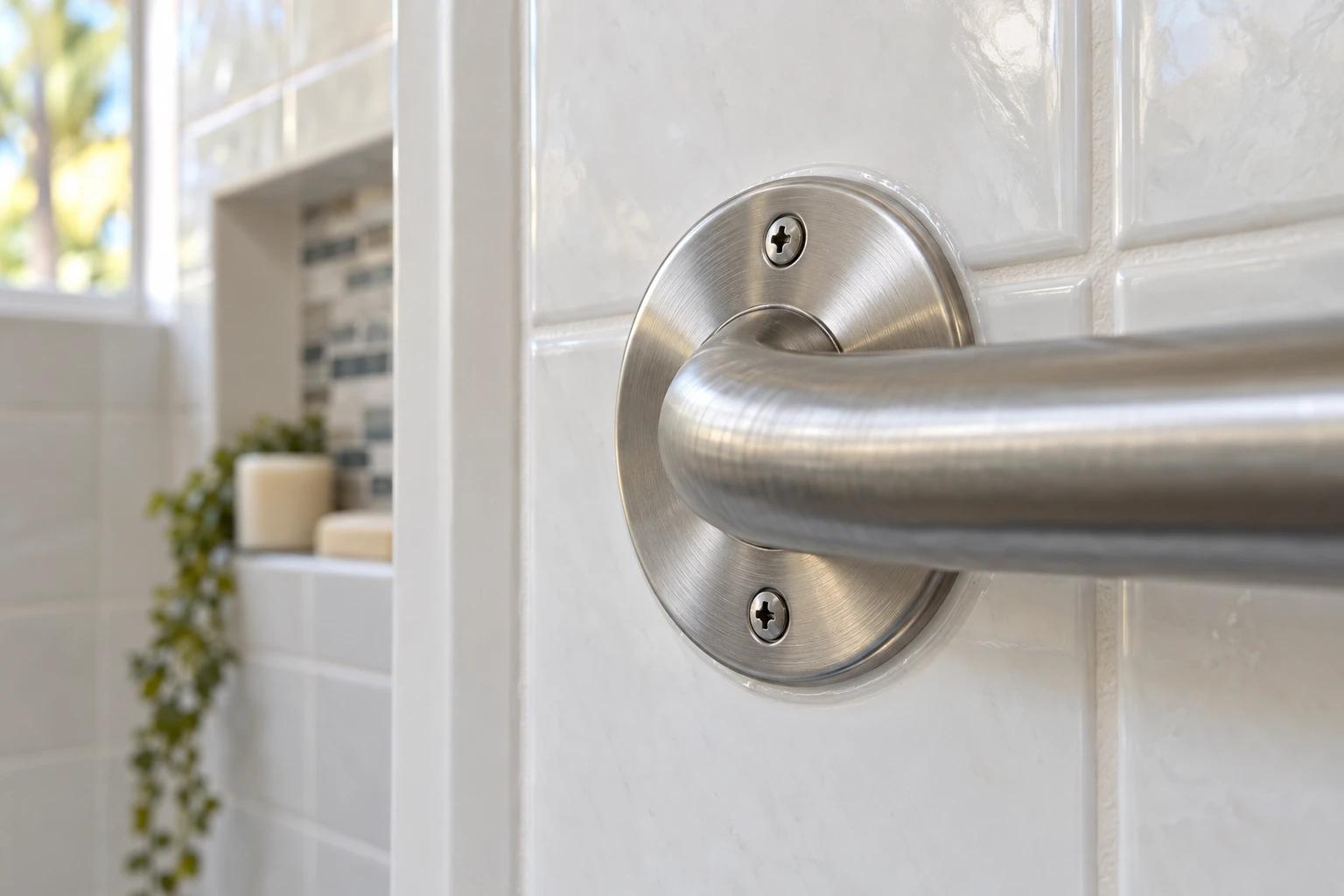
A bar about an inch and a half across fills a closed hand, and one long enough to span two studs fastens at both ends.
What Should You Look For When You Buy a Grab Bar?
A bar that fits the hand, the wall, and the weight it will carry. A few checks in the store save a second trip.
- Length. The bar should be long enough to reach the framing at both ends. Longer bars on the back wall give more places to hold.
- Grip. A textured or knurled bar is easier to hold with wet, soapy hands than a smooth, shiny one.
- Weight rating. Read the package and verify the bar is made to support a person's full weight, not only for balance.
- Finish. Brushed steel, chrome, or bronze can match the shower controls, so the bar looks like it belongs in your bathroom.
- Flange and screws. A sturdy mounting flange with the right screws for your wall matters as much as the bar itself.
Why Can a Grab Bar Not Hang on a Drywall Anchor?
Because a grab bar does its real work in one bad second. When someone slips, the bar takes their whole weight at once, and often with a jerk. A plain plastic drywall anchor is made to hold a towel, not a falling adult.
Every bar we hang goes into wood studs, into solid wood blocking set behind the wall, or into concrete block with masonry anchors. A bar that wiggles even a little is worse than no bar, because someone will trust it.
Suction cup bars are a different story. Many are labeled for balance only, not to hold your weight. A cup can let go on textured tile, on a grout line, or after a few weeks of steam. That is not what an older parent should reach for every morning.
What Tools Does Installing Grab Bars Take?
Fewer than most people expect, but each one matters. Here is what goes in the bag for a grab bar in a tile shower.
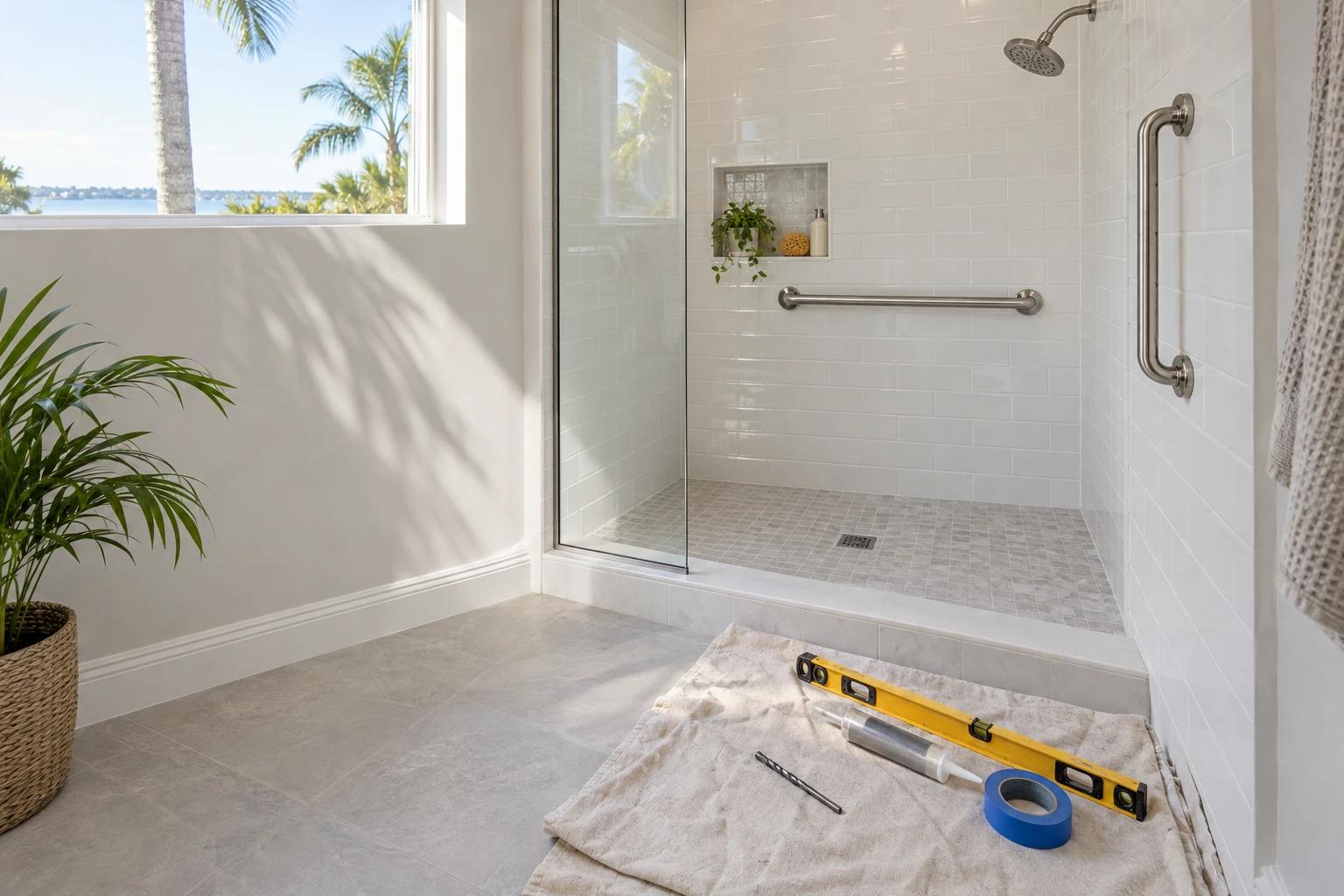
- A stud finder, a tape measure, a level, and painter's tape to find and mark the spot.
- A drill with a diamond or carbide tile bit, and a regular bit for the pilot holes behind the tile.
- A hammer drill only for concrete block, and only after the tile is already drilled through.
- Stainless screws long enough to bite deep into wood studs, or masonry anchors for block.
- Silicone caulk, and a damp cloth to clean the tile before you seal.
If most of that list is not in your garage, it may be easier to let us bring it. That is no trouble at all.
Can a Grab Bar Go Through Tile Without Cracking It?
Yes, with the right bit and some patience. Shower grab bar installation in a tile wall follows the same few steps every time.
- 1
Find the framing first
Locate the studs or blocking with a stud finder before drilling anything. On an inside wall, studs usually sit 16 inches apart. On an outside wall in a block home, there may be no studs at all, only block behind the board.
- 2
Mark the holes on tape
A strip of painter's tape over each hole keeps the bit from wandering on glazed tile. Mark the holes in the mounting flange on the tape and check the bar for level.
- 3
Drill slowly with a tile bit
Drilling tile takes a diamond or carbide drill bit, light pressure, and no hammer setting. A little water on the spot keeps the bit cool, which most bit packages suggest.
- 4
Drill pilot holes into the framing
Once through the tile, switch bits and drill pilot holes into the studs or blocking. Wipe the dust away with a damp cloth so the silicone sticks.
- 5
Seal every hole
A dab of silicone caulk in each hole and behind the flange keeps shower water from running into the wall. Skipping it is how a grab bar starts a leak problem.
- 6
Fasten and pull-test
Screws go into wood or masonry anchors into block, snug and not stripped. Then pull hard on the bar before anyone uses it.
If a tile does crack, it can usually be swapped for a matching one, and chipped and cracked tile is ordinary work for us. Old grout around the bar spot is worth a look while the drill is out. Tile and grout repair can go on the same visit.
What If There Is No Stud Where the Bar Should Go?
Then the bar still goes where the hand needs it, and the framing comes to the bar. Solid wood blocking can be added inside the wall between two studs. Sometimes that means opening the tile. Sometimes the wall can be opened from the room on the other side and patched and painted afterward.
The outside walls of most Florida homes are concrete block. A shower on an outside wall may have block right behind the board, and that is good news. Block holds a grab bar very well with the right masonry anchors. Finding out what is behind your shower is the first thing we check, and finding studs without a stud finder shows how to read your own walls.
Fiberglass and acrylic tub surrounds are thin shells with a gap behind them, the hardest case. We prefer real framing behind the bar there, and we will tell you plainly what your wall allows. Planning a remodel? Blocking goes in while the walls are open, which is far easier than opening finished tile later, and every bathroom remodel timeline has room for it.
Who Installs Grab Bars Before the Family Arrives?
A handyman who does it every week, and the sooner you call, the easier the timing. November and December are the quietest months on our calendar, so the holidays are a good time to get it done. Bathroom repairs came up 14 times in 80 estimate requests pulled from our website between October 8 and November 5, 2026.
Grab bars rarely come alone. Families often add a handheld shower, a comfort height toilet, brighter light on the path to the bathroom, or a lever handle on a stiff door. That kind of list is what aging in place home modifications look like in practice, and one handyman can take care of it in a visit. Whether the bars are for a visiting parent or for you, the goal is the same. It is a steadier step in your own home.
Adult children often arrange the work for a parent, as one Orlando customer did.
"My mother needed some work done at her home. We were very pleased with Rafael who performed the work. He was professional, conscientious and polite. Would definitely use him again." (SN Herring, Google review of the Orlando office, March 10, 2021)
Some local agencies and insurance plans help older homeowners with the cost of safety work, and they are worth a call before the visit.
Our own handymen do the work, not a stranger from a lead site. The price is in writing before we start, and the quote you approve is the bill you get. What sits behind the wall is what moves the price most, and how handyman pricing works in Florida is simple: a free estimate and one written price. Every bar carries a one year warranty, and if one ever moves, we come back and make it right. Call 800-931-1106 and a person answers. Leave a message and we call back within one business day. We would be glad to have the bathroom ready before the family arrives.